Articles to help you get to grips with the German language as it is used in Austria. Are you interested in taking German lessons? The Local has partnered with Gymglish to provide language lessons to readers. Start now and get 1 month free.
It’s that time of year again when many of us will be coughing and blowing our noses. If you're feeling a bit under the weather, here are the German words you'll need and some tips on what to do.
Ahead of the third and final season of Netflix's German-language biopic on Empress Elizabeth of Austria in November, we've rounded up some other very watchable Austrian TV series that showcase Austrian dialects.
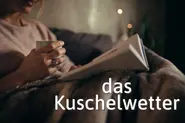
When the rain falls softly, the sky turns grey, and all you want to do is stay under a blanket with tea and a good film – that’s what Germans and Austrians call Kuschelwetter.
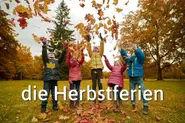
For students across Austria, the arrival of Herbstferien means one thing: a well-deserved break between the first school tests and the start of winter.
Foreign parents in Austria who don't speak German at home - or parents who move to Austria from a non-German speaking country, are often concerned about the start of school life. What happens if their child's German is below standard?
If you learned German in Germany, you may be looking for a Mülleimer. In Austria, however, someone is more likely to point you to the Mistkübel instead.
Let's face it here are certain German words you'll hear in Austria that bring out the 5-year-old in all of us. Share your favourite or tell us which ones we've missed.
When a colleague starts explaining a problem that definitely isn’t yours to solve, German has a pleasantly blunt way to make that clear: Das ist nicht mein Bier.
Mid-September is Zwetschken season in Austria. The blue-purple fruit is appearing at markets, in supermarkets and in some of the country’s most comforting autumn desserts.
For pupils in six Austrian provinces, Monday marks the end of the summer holidays and the start of a new school year. Before long, many of them will also have their first Schularbeit.
Applying for citizenship in Austria can be a lengthy and daunting process - and understanding the lingo is like learning a new language in itself. These are the top words and phrases you're likely to hear along the way.
Austria is getting a rather literal Wetterumschwung today. After another hot and sunny start in the east, a cold front is crossing the country from west to east with rain, thunderstorms, strong wind and much cooler air.
September is Almabtrieb season in Austria. Across the Alpine provinces, cattle, sheep, goats and even horses are beginning their journey back from the high mountain pastures, with some of the biggest celebrations of 2026 taking place over the coming weekends.
For pupils in Vienna, Lower Austria and Burgenland, Monday marks the end of the summer holidays and the start of a new school year. That also means the return of the Hausübung.
September begins with a particularly well-timed German word in Vienna. On September 1st, the traditional grape harvest at Schwarzenbergplatz marks the symbolic start of the city’s main wine harvest, or Weinlese.
Late August marks the beginning of a very particular kind of autumn in Salzburg. Across the province, harvest celebrations, regional food, traditional crafts and the first cattle drives all come together under one seasonal name: Bauernherbst.
Austria may be heading towards September, but summer isn’t quite finished yet. With another spell of temperatures above 30C forecast for the final days of August, this is a good moment for a word describing that in-between stretch: Spätsommer.
With Austria’s summer holidays entering their final stretch, thousands of children are getting ready to walk into a classroom for the first time. In Austria, there’s a particularly charming word for these brand-new pupils: Taferlklassler.
Foreign residents' language skills are a hot topic in Austria. We want to hear your experience of learning German and whether you think a fluent level of the language is essential to life in Austria.
If the Austrian summer has started to feel especially hot and sticky, there’s a German word for this particular stretch of the season. The Hundstage traditionally fall between July 23rd and August 23rd and is associated with the hottest part of the European summer.
August can feel unusually quiet in Austria, particularly when offices empty out, politicians disappear on holiday, and the usual stream of news seems to slow to a trickle. Germans have a word for exactly this period: Sommerloch.
This is a German expression that says a lot about habits, caution and the suspicion of anything unfamiliar. One useful proverb is Was der Bauer nicht kennt, das isst er nicht.