
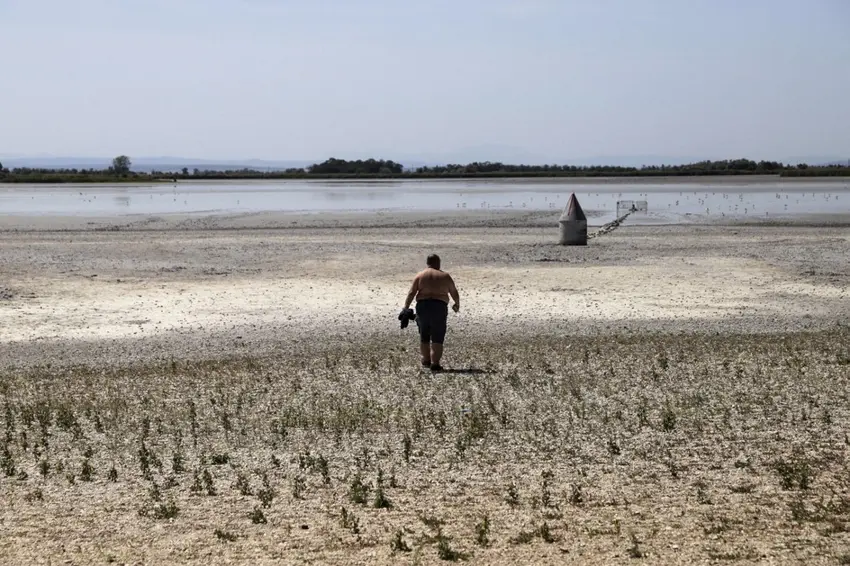
In Salzburg, the first hay cut was up to 50 percent lower than in previous years in some areas, ORF Salzburg reported, citing the Chamber of Agriculture.
For ordinary citizens, this might be of little relevance, but the context here is very important. Hay, the Chamber of Agriculture highlights, is feed. In other words, if meadows produce less grass, farmers have less for cattle and other animals – and will often need to buy more feed.
That, in turn, raises costs and will eventually spill over all the way down to the supermarkets and the food that those ordinary citizens, who knew very little about the hay cut situation, consume.
What has happened in Salzburg?
The dry weather meant that the grass on many meadows grew much less than usual. In some places, plants and leaves turned brown, and both the amount and quality of feed declined.
To help farmers secure at least some yield, certain biodiversity areas are being allowed to be mown earlier than usual this year. These are areas that normally stay untouched for longer, giving plants and animals more time to develop or find shelter. In Flachgau, for example, so-called mosaic areas are usually mown later in the year.
There is a trade-off. Earlier mowing can help farmers obtain feed, but it can also reduce the ecological value of those areas. Thomas Frank of the University of Natural Resources and Life Sciences in Vienna told ORF Salzburg that early mowing can be problematic because many plants may not reach the seed stage, meaning they cannot reproduce properly for the following year.
READ ALSO: IN PICTURES: How drought and extreme heat are affecting Austria
How dry has Austria been?
The problem is not limited to one province. The Federal Ministry for Climate said April 2026 saw very little rain across Austria. On average, only around a third of the long-term average monthly rainfall fell.
The ministry said river flows were low and groundwater levels were generally low. By the end of April, just over 70 percent of groundwater measuring sites had below-average levels, up from around 65 percent at the end of March.
Snow in higher areas was also below the long-term average, so the contribution from snowmelt to river flow and groundwater recharge was expected to be lower in the following weeks.
May didn't solve the problem. GeoSphere Austria said May 2026 was hot and dry, with one third less rainfall across the country on average. Some regions, including Flachgau, Innviertel, the Vienna Basin and northern Burgenland, remained very dry, receiving around half to two thirds less rain than the 1991 to 2020 average.
GeoSphere also recorded unusually many hot days in May, with 46 measuring stations setting new records for the number of days reaching at least 30C.
READ ALSO: Austria braces for spell of intense heat
Is drinking water at risk?
The ministry says Austria is well-positioned in terms of water supply and that a nationwide water shortage is not currently expected. But it also says regional and temporary bottlenecks can occur.
The ministry also said that it's prioritising measures to protect water resources, including investment in drinking-water and wastewater infrastructure. In 2025, around €898 million in investment was triggered for drinking-water supply and wastewater disposal, including new and renovated water pipes.
What does this mean for residents?
For most households, the immediate effect is likely to be indirect rather than dramatic, but still visible: drier gardens, more stress on local ponds and streams, and possible appeals from municipalities to use water carefully if dry weather continues.
Residents should pay attention to local rules. During dry periods, municipalities can issue restrictions or requests regarding lawn watering, pool filling, car washing, or the use of water for non-essential purposes.
Gardeners may also need to adapt, especially in hotter and drier areas. Watering early in the morning or later in the evening, using mulch and choosing more drought-tolerant plants can reduce water use. For people outside cities, especially those using private wells, dry periods can be more serious. Low groundwater levels can affect availability, and water quality may need closer attention.
READ ALSO: What Austria's new heat rules mean for workers this summer
Key vocabulary
die Trockenheit – drought or dry conditions
das Grundwasser – groundwater
der Niederschlag – precipitation or rainfall
die Mahd – mowing or hay cut
das Futter – animal feed or fodder
die Biodiversitätsfläche – biodiversity area
Comments