

Temperatures have been high across Austria this summer and rainfall have been low. While many have welcomed the long, hot days, the heat has negatively affected Austria’s water reserves.
The hot and dry spring and summer mean communities in Vorarlberg and Upper Austria are running out of water.
Ich bin heute mit dem Zug am Reiterersee und am Anemonensee bei Wiener Neustadt vorbeigefahren. Beide Seen sind ausgetrocknet. Ich bin dort aufgewachsen und habe so etwas noch NIE gesehen! #Wassermangel#KlimakriseDaheim pic.twitter.com/06FFBioUxo
— Agnes Zauner (@agnes_zauner) August 15, 2022
In Langen near Bregenz, the drinking water tanks are empty and the municipality is therefore appealing to the population to only use water for personal hygiene and as drinking water for people and animals.
In Traunkirchen in Upper Austria, the population is also being called on to water their gardens with rainwater to save water due to shortages.
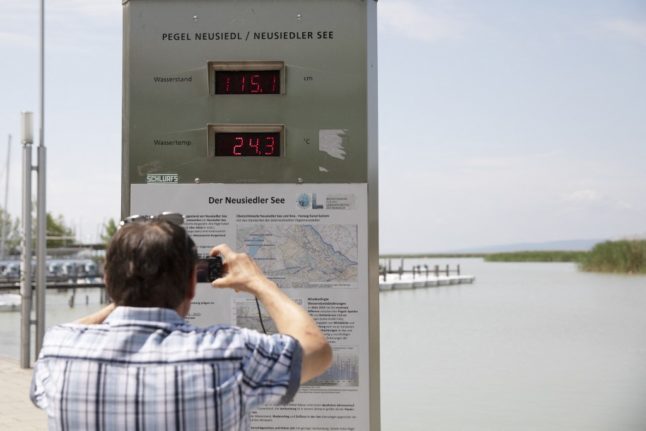
In July, the popular holiday location of Lake Neusiedl in Burgenland reached its lowest levels in almost 20 years. And as the lake is mainly fed by rainwater, it takes a long time for it to recover water levels after a drought.
READ ALSO: Austria and Hungary fight nature to stop lake vanishing
Austrian and Hungarian authorities were working to supply water to the lake, which is very important to both countries as a tourist destination and a food production region.
As lake temperatures rise, Austria also needs to cope with the death of hundreds of fish. For example, when Zicksee lake dried out in Burgenland, workers were called to clear the dead fish in St Andrae am Zicksee.

Similarly, forests in Lower Austria (including the Vienna Woods) are being hit by dry weather conditions due to low groundwater levels.
The record-breaking drought even resulted in forest fires in parts of the Alps during the past month, despite snow still coating the mountains.
READ ALSO: Smoking cigarettes in Austrian forests could cost you €7,270
This follows several years of little snow and rainfall in autumn and winter in the region, and forest managers are now debating the best course of action to tackle the problem.
https://twitter.com/Deutschland_BRD/status/1503329634519191555
Changes are also taking place in the Alps, with temperatures rising by nearly two degrees Celsius in the past 120 years — almost double the global average, according to the International Commission for the Protection of the Alps (CIPRA).
READ ALSO: Austrian scientists race to reveal melting glaciers’ secrets
In Tyrol, the Jamtal glacier has been losing about one metre (three feet) from its surface annually, but it has already lost more than a metre so far this year.

Even in the capital Vienna the drought and extreme heat are causing problems. For horses, temperatures above 35C can cause severe discomfort and force riders to halt the traditional (and very touristic) tours of the so-called fiaker in the city's first district.

For people, the heat is dangerous and the capital provides its residents and visitors with several places where they can cool off - from public pools to "cooling centres".
READ ALSO: Vienna’s free ‘cooling centre’ lets you avoid Austria’s stifling heat

Comments