
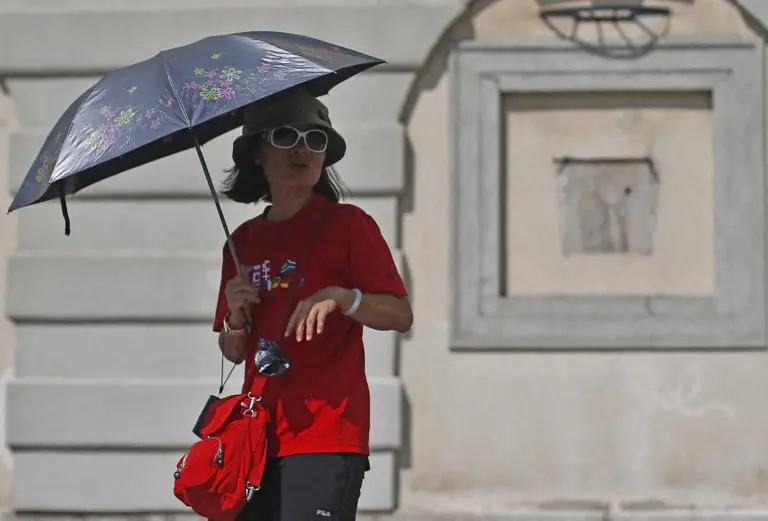
The Hitzeschutzverordnung, or Heat Protection Regulation, has been in force since January 1st, 2026. It establishes a specific legal framework for heat protection at work, supplementing existing occupational health and safety rules.
The change comes as heat is becoming a growing workplace problem in Austria. According to ORF, almost two-thirds of the population, 62 percent, reported at least one heat-related health burden in 2025. In the especially hot summer of 2024, that figure was 85 percent.
Who is covered by the new rules?
The regulation is aimed at employees who work outdoors.
According to the Austrian Economic Chamber, it applies to workers outdoors at workplaces, on construction sites and at external work sites under Austria’s Occupational Safety and Health Act.
The sectors particularly affected include construction, delivery services, security services, waste treatment, festival operations and landscaping.
It doesn't apply to workers in enclosed indoor workspaces. It also excludes short outdoor tasks, such as brief walks to a car or light work lasting up to 60 minutes per day.
READ ALSO: What rights do workers in Austria have when it gets too hot?
When do employers have to act?
Employers must evaluate the risks posed by heat and UV radiation to affected workers and implement measures where necessary.
The key trigger is a heat warning from GeoSphere Austria. Once there is a heat warning of at least level two, known as “Vorsicht, gelb”, in the area where employees are working, employers must implement the measures set out in their heat protection plan.
The Social Ministry says this starts from 30C.
The measures must be available to employees and to the Labour Inspectorate, either electronically or on paper.
What measures can workers expect?
The regulation lists several types of protection.
Employers may need to move the start of work earlier, add or extend breaks, reduce work intensity, or shift physically demanding tasks to cooler times of day.
Technical measures can include shade at workplaces, shower facilities or fans. Organisational measures can include moving work into the shade or rotating tasks.
Personal protection can include light clothing, UV-protective clothing, head protection, neck protection, sunglasses, sunscreen, cooling clothing such as cooling vests or neck cloths, and drinking water or other non-alcoholic drinks.
The Social Ministry also mentions cooling for crane cabins and work equipment. The WKO says crane cabins must contain cooling equipment, though crane cabins already in use when the regulation came into force have until January 1st, 2027 for this requirement.
Self-propelled work equipment, such as excavators, loaders, rollers, lorries and cars, must have sufficient air conditioning. For equipment already in use when the regulation came into force, this rule does not apply in the same way, but other remedies must be provided.
READ ALSO: How to stay cool in Austria as the heatwave hits
Why is Austria doing this now?
The Health Austria, or GÖG, says climate change is already placing a serious burden on workers in Austria.
The number of hot days in Austria has already tripled compared with the climate period from 1961 to 1990. Heatwaves are becoming more frequent and lasting longer.
Workers who do physically hard work or work outdoors are especially affected, including construction workers, people in agriculture and forestry, delivery and transport workers, emergency services, health and care workers, and industrial workers.
The report also points to accident risks. Studies from Germany and Switzerland show that the number of workplace accidents rises by around seven percent at temperatures above 30C.
There are economic effects, too. Austria lost around 12.8 million potential working hours because of heat in 2024, around half of them in construction.
Who checks whether employers comply?
The Labour Inspectorate is responsible for checks.
Labour Minister Korinna Schumann told ORF that the rules are now in place, but there is also still a counselling phase. The WKO describes the approach as “Beraten statt Strafen”, meaning advice before punishment.
READ ALSO: How many breaks can you take at work in Austria?
Workers who believe heat protection is not being handled properly can contact the Labour Inspectorate, which can also examine complaints.
Key vocabulary
die Hitzeschutzverordnung – Heat Protection Regulation
die Hitzewarnung – heat warning
die Arbeitsinspektion – Labour Inspectorate
der Hitzeschutzplan – heat protection plan
die Baustelle – construction site
das Trinkwasser – drinking water
Comments