
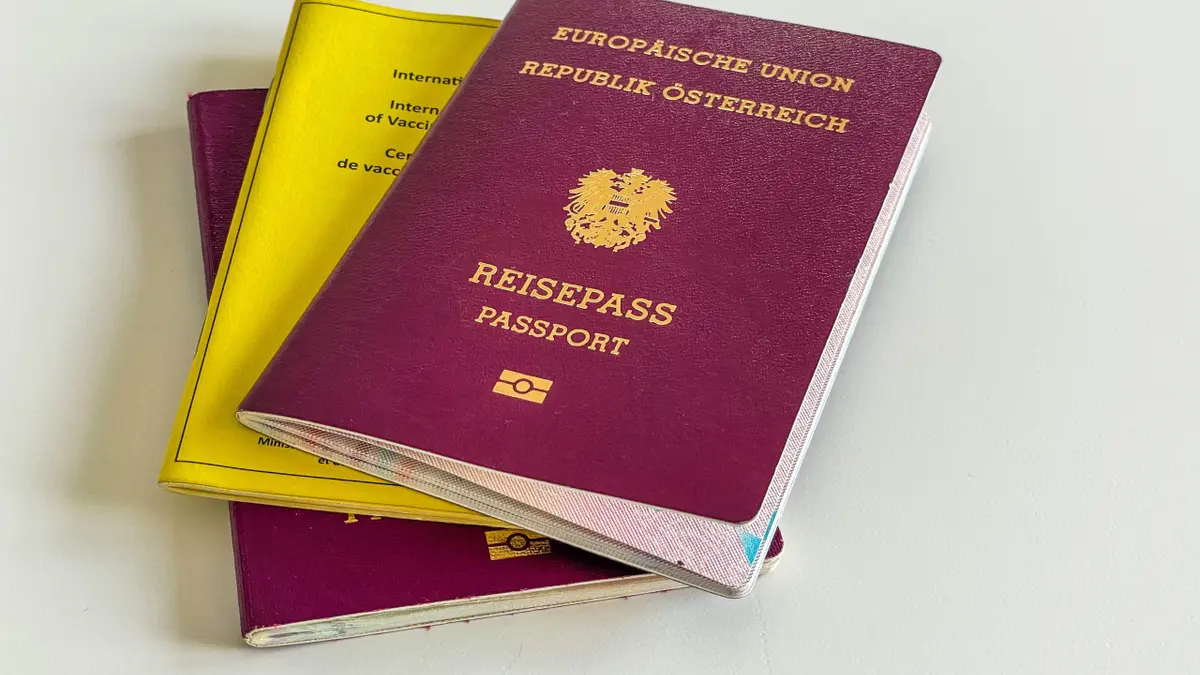
Since January 1st 2025 more than 17,600 people have become Austrian citizens between – an 11.5 percent increase compared to the same period last year (January to end of September), according to new data from Statistics Austria.
The rise is driven by two main groups: descendants of victims of National Socialism, most of whom live abroad, and long-term residents who have made Austria their home.
READ ALSO: Is your Austrian citizenship ‘safe’ after three years of naturalisation?
Who are the new Austrians?
Between January and September 2025, a total of 17,649 people were granted Austrian citizenship. Of these, 10,885 live in Austria, while 6,764 (38.3 percent) are based abroad.
Victims of Nazi persecution and their descendants continue to make up the largest group of new citizens, accounting for 38.2 percent of all naturalisations in 2025 so far. A total of 6,745 people were naturalised under this legal category, the only one that allows dual citizenship, with 99.7 percent residing outside Austria.
The majority of new citizens in this group came from Israel (3,650), the United States (1,821), and the United Kingdom (651).
The second-largest group (31.2 percent) consists of residents who have lived in Austria for at least six years. Naturalisation in these cases typically depends on meeting integration and language requirements.
READ ALSO: EXPLAINED: What is the '2-year rule' for new Austrian citizens?
Where in Austria are most new citizens?
Naturalisation rates increased in seven of Austria’s nine provinces. Vorarlberg saw the largest relative jump, up 43.6 percent to 701 people. Burgenland followed with a 30.1 percent increase, and Lower Austria rose 28.5 percent to 2,045. Vienna, which historically accounts for the highest number of new citizens, recorded an 18.3 percent rise to 3,284 naturalisations.
Only Upper Austria (–8.7 percent) and Salzburg (–5.8 percent) saw declines compared to last year.
READ ALSO: How foreigners can get fast-track citizenship in Austria
Where are the new citizens originally from?
Almost half of all people naturalised while residing in Austria previously held citizenship from one of five countries: Syria, Turkey, Afghanistan, Bosnia and Herzegovina, and Iran. Together, these account for 47.4 percent of resident naturalisations. Syrians represent the largest single group, with 2,080 new Austrian citizens (19.1 percent), followed by 1,172 from Turkey and 870 from Afghanistan.
The figures also show Austria’s changing demographics. About one in five new citizens (3,570 people) were born in Austria, and nearly a third (32.3 percent) are under 18 years old. Women make up exactly half of all those naturalised.
READ ALSO: Austrian citizenship: Do you really have to renounce your original nationality?
Legal basis for citizenship
Most new citizens in 2025 (about 77 percent) obtained Austrian nationality through a legal entitlement, meaning the authorities were required to approve their applications once all criteria were met. This group includes people with established ties to Austria, such as long-term residents, recognised refugees, and spouses of Austrian citizens who demonstrated “sustainable integration.”
Specifically, 5,511 people qualified after at least six years of residence, 560 through marriage, and 428 after at least 15 years of residence.
By contrast, 903 people were granted citizenship at the authorities’ discretion, where approval is not automatic but depends on factors such as integration, conduct, and public interest. A further 3,210 relatives (mainly spouses and children) gained citizenship through extensions of existing naturalisations.
READ ALSO: Will a dual-citizen child in Austria have to choose a nationality?
A growing number of red-white-red passports
Manuela Lenk, Director General for Statistics Austria, said the continued increase highlights both Austria’s historical responsibility and its present-day diversity.
“The rise is mainly due to growth in the two largest groups of new Austrians: victims of National Socialism and their descendants, and people who have lived in Austria for at least six years,” she explained.
With nearly 18,000 new citizens by the end of September, 2025 is on track to exceed last year’s total of 20,000 naturalisations.
Comments