
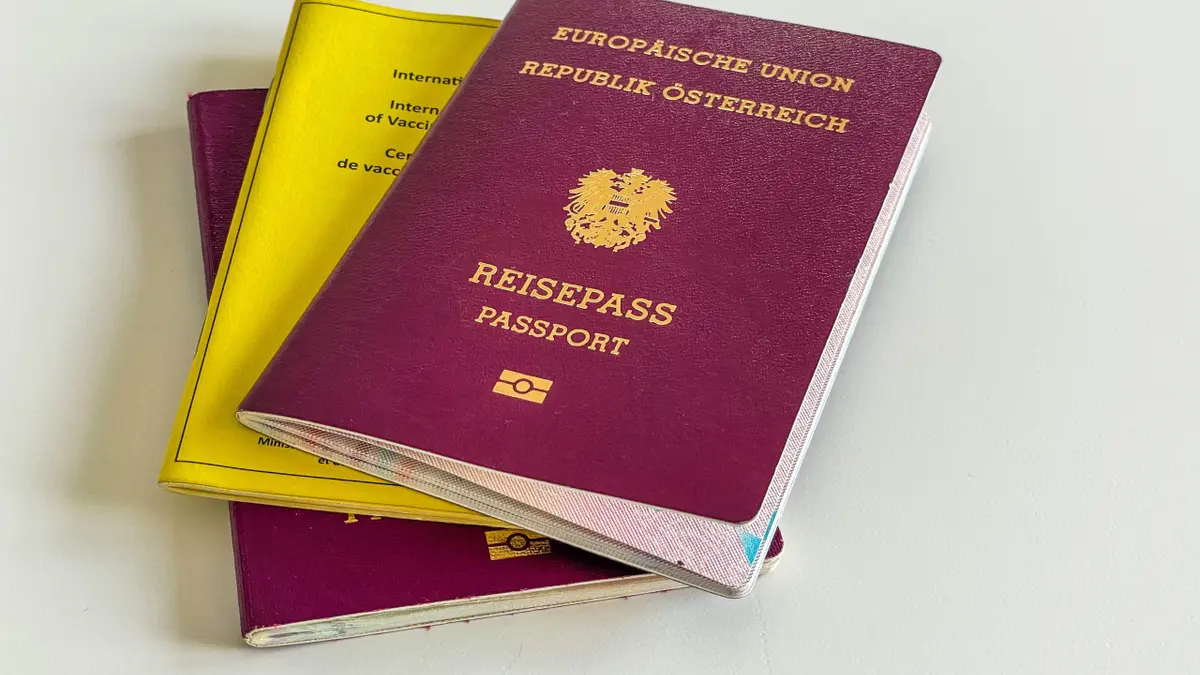
A reader recently contacted The Local Austria with concerns about the security of Austrian citizenship. They had been told that authorities could revoke citizenship within three years if it turned out they had made a mistake in granting Austrian nationality, but that after this period, they were "safe."
But is this accurate? We asked citizenship law expert Dr Philipp Haas, Attorney at RIHS Rechstanwalt, to explain and spoke with Vienna's Municipal Department 35 - Immigration and Citizenship (MA 35).
Can Austrian citizenship be revoked due to administrative errors?
The short answer is no, not for any errors such as authorities including wrong addresses, wrong personal details or wrong information about language levels.
Once Austrian citizenship is granted, it is considered a legally binding decision that cannot be reversed over an error, according to Dr. Philipp Haas, Attorney at RIHS Rechtsanwalt.
“There is fundamentally no right for the responsible citizenship authority (in Vienna: MA 35) to revoke the decision if an error is later identified,” Haas explained.
“The granting of Austrian citizenship is a legally binding decision that cannot be easily changed," he said.
In principle, revoking or reopening the proceedings for administrative errors is out of the question, according to the expert.
“In the event of fundamental errors by the authority, a reopening is not possible and the legal validity of the decision applies”, he added.
READ ALSO: How long does the naturalisation process for Austrian citizenship take?
However, under certain circumstances, the process can be reopened or reviewed, and this could indeed result in the loss of Austrian citizenship.
“A review can take place if new facts or evidence emerged that were previously unavailable during the application process or if the decision was dependent on preliminary issues and the competent authority subsequently decided differently on such a preliminary issue,” Haas said.
In most of these cases a reopening can only be considered within a three year time period and even in these cases, a review is only permitted if it does not result in statelessness.
However, if someone is later found to have obtained citizenship through fraud, such as forged documents, or another crime, authorities can reopen the case at any time. In other words there’s no three-year time limit in these cases.
So, while it is incorrect to say that MA 35 has an “automatic right to revoke” citizenship within three years, it is also inaccurate to assume that one is entirely “safe” after this period - especially if fraud or deception were involved.”
“The statement that someone is ‘safe’ after three years is not entirely correct—it only applies if citizenship was granted without deception or false statements,” Haas said.
So while Austrian citizenship is a legal right once granted, applicants should ensure their application is truthful and complete, because fraudulent claims can lead to revocation at any time.
What does MA 35 say about this three-year period?
MA 35 confirmed that there is no such thing as "citizenship on probation." In an email to The Local Austria, the authority stated:
"No, there is no such thing as ‘citizenship on probation.’ This is likely a misunderstanding of cases where individuals must renounce their previous nationality within two years. If they fail to do so, Austrian citizenship may, under certain conditions, be revoked (see §34 Austrian Citizenship Act)."
READ ALSO: What is the '2-year rule' for new Austrian citizens?
When can Austrian citizenship be revoked?
According to the Austrian Citizenship Act, Austrian citizenship can be revoked under specific legal conditions, including:
- Acquiring another nationality: Unless someone is a dual citizen by birth or has received special permission, Austrian citizenship is automatically revoked when another nationality is obtained.
- Military service for a foreign country: Austrians who voluntarily enlist in the army of another state may lose their citizenship.
- Working for a foreign secret service: This is another ground for losing Austrian nationality.
- Engaging in combat for an organised armed group: The law specifically targets individuals who fight for groups such as ISIS.
- Conviction for terrorism: Austrians found guilty of specific terrorism-related crimes may have their citizenship revoked, provided they do not become stateless.
- Failure to renounce a previous nationality: If a new citizen is required to give up their former nationality and fails to do so within two years for reasons they are responsible for, their Austrian citizenship may be withdrawn.
READ MORE: EXPLAINED: When can Austrian citizenship be revoked?
However, international rules preventing statelessness make it extremely difficult for the revocation to take place even under these circumstances.
What about cases where citizenship is promised but not yet granted?
The expert noted that it’s important to distinguish between people who have already received Austrian citizenship and those who have only been given conditional approval.
“In cases where a foreign national is granted a conditional approval of Austrian citizenship - meaning they must first renounce their previous nationality within two years - the authorities can revoke this approval if a requirement (except secure livelihood) is no longer met,” Haas explained.
However, citizenship cannot be revoked for issues that already existed when it was first approved. In such cases, the only option is to reopen the process if the legal requirements are met.
READ ALSO: How could Austria's citizenship laws change under a far-right government?
No official statistics show how many people have their Austrian citizenship revoked each year.
However, according to reports, the numbers are estimated to be relatively low—likely fewer than 100 cases yearly.
READ NEXT: The reasons your Austrian citizenship application might be rejected
Dr Philipp Haas is an Attorney at RIHS Rechtsanwalt. He can be reached via the website or email (philipp.haas@rihs.law).
Comments (1)