
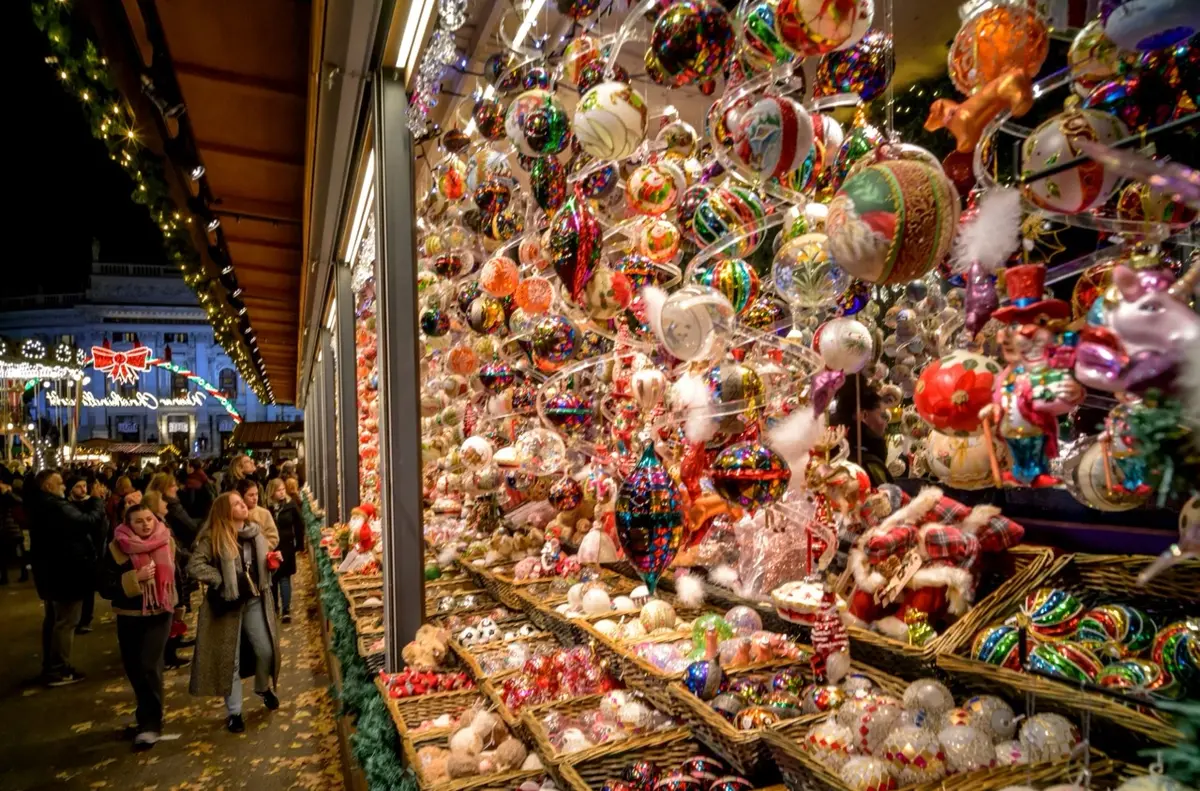
The Christmas season in Austria is full of traditions that make it a great time of year to be in the country.
With 55.2 percent of the population identifying as Roman Catholic (according to 2021 Statistik Austria data), many of these traditions have religious roots, but they also involve family gatherings, festive meals, and unique local customs that create a magical atmosphere.
These traditions begin as early as November and continue until January 6th, when Christmas decorations are traditionally taken down.
Christmas markets can open in early November, including in Vienna, while others begin later in the month. These markets are packed with glühwein, punsch, and local treats and are lit up by Christmas lights, attracting visitors from all over.
READ ALSO: The best winter activities to do in Vienna this year
Don't want to miss out on any traditions? Here are the dates for the Austrian Christmas season:
Advent Sundays: November 29th to December 20th
The Advent season officially begins on the first Sunday of Advent, which in 2026 falls on November 29th. The following Advent Sundays are December 6th, 13th and 20th.
This marks the start of the four-week period leading up to Christmas. Austrian families traditionally celebrate this by baking biscuits, decorating their homes, and preparing an Advent wreath (Adventkranz) that holds four candles.
Every Sunday ahead of Christmas, one new candle is lit, symbolising the countdown to Christmas. Families might also gather for a festive meal and sing carols, including “Silent Night,” which actually originated in Austria.
Advent Calendar: December 1st-24th
Another cherished tradition in Austria is the Advent calendar.
Starting on December 1st, Austrians open a new window (or box) every day to count down to Christmas. While modern calendars often feature chocolates or toys, some Advent calendars include small religious symbols or quotes.
Over the years, special-themed Advent calendars have emerged, such as ones designed for pets, or with make-up or toys.
St. Barbara’s Day: December 4th
On December 4th, Austrians celebrate St. Barbara’s Day, known as Barbaratag.
A lesser-known but still charming tradition is cutting twigs from cherry or forsythia trees. If these twigs bloom by Christmas, it’s said to bring good luck or even signal a marriage in the family in the coming year.
Krampus: December 5th
One of the most famous Austrian traditions around Christmas is the arrival of Krampus on December 5th.
This terrifying horned creature, known for its devilish appearance, punishes naughty children during Christmas.
On Krampusnacht, people dressed as Krampus parade through towns and villages, shaking chains and making a lot of noise.
A participant performs during a procession of 'Krampus' monsters in Austria. (Photo by ALEX HALADA / AFP)
St Nikolaus: December 6th
Following Krampus, St. Nicholas himself visits during the night of December 5th to 6th.
Known as the "Austrian Santa," St. Nicholas brings sweets, peanuts, and tangerines for well-behaved children.
Austrian families place their shoes or boots outside the door in the evening, and by morning, they’re filled with treats.
Immaculate Conception: December 8th
December 8th is the Feast of the Immaculate Conception (Mariä Empfängnis), a Catholic celebration and nationwide public holiday in Austria.
Unlike most public holidays, shops are allowed to open between 10am and 6pm on this day, although not all businesses choose to do so.
Christmas Eve and Christkind: December 24th
The highlight of the Christmas season in Austria occurs on Christmas Eve.
While many countries celebrate Christmas Day as the primary event, in Austria, the real celebration occurs on December 24th. Austrians decorate their Christmas tree, often only on the day itself, and gather for a festive dinner. The meal can vary widely depending on regional and family traditions, with dishes ranging from roasted goose to raclette.
An important distinction in Austria is the absence of Santa Claus, who is replaced by the Christkind (Baby Jesus). This figure is believed to bring gifts to children on Christmas Eve.
The Christkind is depicted as an angelic figure who rings a bell and lights the Christmas tree, often surprising children as they enter a room filled with presents.
READ ALSO: 10 must-try food and drinks at Austria's Christmas markets this year
Christmas Day and St. Stephen’s Day: December 25th and 26th
Though Christmas Eve is the most significant part of the celebrations, the following two days are also important.
On Christmas Day, Austrians continue to celebrate with family gatherings, festive meals, and more gift exchanges. Many people also take to the mountains to go skiing.
On December 26th, Austrians celebrate St. Stephen’s Day, a public holiday for religious observance, where many people attend church services and spend time with family.
Epiphany: January 6th
The Christmas season officially ends on January 6th with Epiphany.
This day marks the visit of the three wise men to the baby Jesus, and Austrians celebrate it with a custom of chalking the initials of the kings above their doorways - C + M + B - along with the year.
The chalking is meant to bring blessings to the household for the coming year. Some Orthodox churches in Austria also celebrate Epiphany on January 6th. However, for communities following the Julian calendar, including many Serbian and Russian Orthodox Christians, January 6th is Christmas Eve and January 7th is Christmas Day. They celebrate Epiphany on January 19th.
READ NEXT: EXPLAINED: How to dispose of your Christmas tree in Austria
Comments