

Austria is a fantastic country to live and raise a family, and that's not a secret. I've lived here for about eight years, and my husband arrived as a kid more than 30 years ago.
We both plan on staying for the foreseeable future, and we have never had issues living here as foreigners (apart from some xenophobia, of course). As EU citizens, the bureaucracy has been minimal, especially compared to the hard time I've seen my friends from third- countries having to get and renew residency permits.
The only big thing missing for us was the right to vote. We were never the "I'm their guest, it's their country" type of immigrants, and we firmly believe it should be a human right to have a proper say in a democracy. I could go on and on about this, but if I pay my taxes here and have funded the government for years, I should have a say in what it does.
Like in the rest of the world, the right to vote is attached to citizenship. However, unlike the rest of the world, citizenship in Austria is very hard to acquire. We were both entitled to it according to the basic requirements, but the journey would still be long.
The first to quit
The process is quite expensive, and it would mean spending thousands of euros for both of us. But that was not the main thing that made me give up. It was the fact that Austria does not allow dual citizenship via naturalisation (except for some specific cases).
I have Brazilian and Italian citizenship from birth, and most of my family still lives in Brazil, where I was born and raised. It seemed unfathomable to me that if my parents ever got sick and I decided to stay for a prolonged period, I'd have to obtain a visa for my birth country. Giving up citizenship also meant more troubles with bureaucracy in case of death and inheritance in the family, property that I might want to acquire there, and my children would not be Brazilian.
READ ALSO: Will a dual-citizen child in Austria have to choose between nationalities?
Besides, I am still very much Brazilian. I live in Austria and will probably grow old here, but my Brazilian roots are deep, even if my tax money goes to a different country—where I would like to have a political voice.
So, I gave up on the naturalisation process, hoping that one day Austria would realise that people can feel connected to more than one land and that citizenship should not be this elitist and exclusive privilege but a path to integration.
Though upset about having to give up his Croatian and Bosnian citizenship, my husband decided he felt Austrian enough to go forward with his process.
The immigration and citizenship office madness
When we started this journey, we knew the hurdles we might face, especially with the Viennese immigration and citizenship office, the MA35. It is famous for delays, crazy requests and impolite workers.
However, my husband had lived in Austria since he was about six years old and had his entire education here. German is his first language, and that meant he could skip many of the requirements for naturalisation (including proving German proficiency and passing the citizenship test). We thought that would mean he'd have an easier path to naturalisation.
It didn't.
We were lucky that all the immigration staff he talked to were very friendly and polite, but if he had one person one day, they would ask him for one set of documents. The list was different if he met with someone else the next day.
They were picky about our finances, and the fact that he had worked in Austria all his life and still had a good job wasn't enough. We needed proof of the strangest things, including that we paid for a parking spot for our car in our previous apartment.
The worst part was when they made no sense at all. One of the documents cited on the list was the Anmeldebescheinigung, the residence document EU citizens must have after three months of living in Austria. When my husband moved here, that didn't exist. Instead, after many years living in the country, he got the Daueraufenthalt.
To be clear, the "Dauer" trumps the "Anmelde". It's a permanent residence card.
READ ALSO: ‘Insensitive and inefficient’ - Your verdict on Vienna’s immigration office MA 35
Still, when we tried to submit his Daueraufenthalt, the MA 35 folk refused to accept it, saying he would need the Anmeldebescheinigung instead. We tried to explain that he couldn't have the Daueraufenthalt if he didn't qualify for the Anmeldebescheinigung, and that most people who have the Daueraufenthalt just "upgraded" from the Anmeldebescheinigung. Still, they didn't listen.
So, feeling like a madman, he set an appointment with the MA35—but a different section—to get an Anmeldebescheinigung. There, the MA35 people told him that if he had the Daueraufenthalt, he didn't need the Anmeldebescheinigung. So he told the MA35 people that the other MA35 people said he did need that document for his citizenship application.
It was a surreal experience.
Right about that time, I got pregnant with our first (and only) son, and things got even more complicated.
Citizenship rights for children
When I got pregnant, I knew that depending on how fast the naturalisation process of my husband ended, my child could have two very different lives.
If my husband had been naturalised before they were born, that kid would have been an Austrian, Brazilian, and Italian citizen, allowed to keep all three nationalities simultaneously.
However, if the process took longer than nine months, as it was clear it would, the child would be Croatian, Bosnian, Brazilian and Italian. They could keep all four nationalities or choose to naturalise Austrian and give up all the others. If we moved forward with my husband's naturalisation process, we could include the minor child.
READ MORE: Can children under the age of 18 be naturalised in Austria?
For a while, he might keep many different nationalities (depending on each country's rule for abdication by minors). But when they turned 18, a choice would have to be made: Austrian citizen or all others.
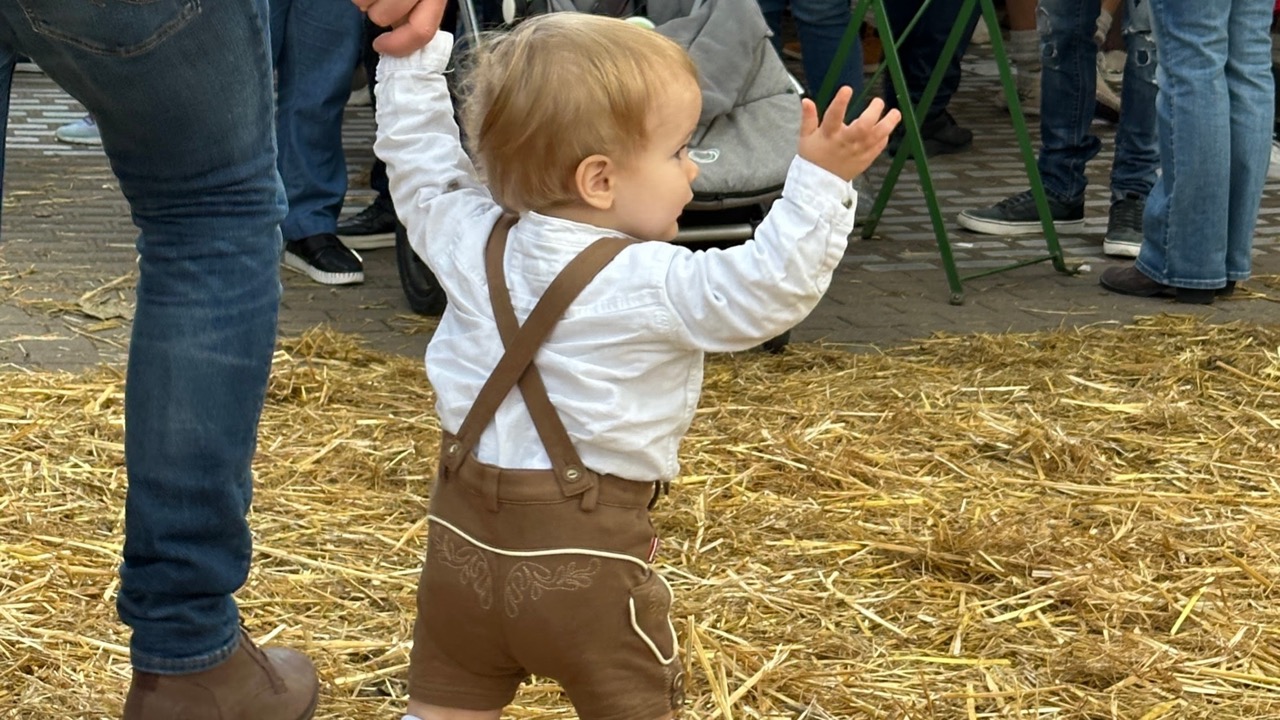
To complicate things further, if my husband naturalised after the birth of our first child and we decided to have another one, the siblings would be in very different legal situations regarding their citizenship.
Things started getting complex; we still had to explain to the MA35 that it didn't want to give us an Anmeldebescheinigung, so we started to think that the thousands of euros we'd spend on this process would be better spent on diapers.
And so my husband also gave up the naturalisation process.
It still pains me to think that my son (born and raised in Austria) will possibly never be allowed to vote here unless he gives up being a citizen of his parents' homelands, where most of his family still live.
READ ALSO: How would a far-right government in Austria impact foreigners’ lives?
My hope is that in the next 16 years or so, a more progressive government will change these outdated laws to integrate better the hundreds of thousands of foreigners who have roots in Austria and other parts of the world. I hope they will simplify the process and remove the high financial hurdles.
This way, he won't have to give up a part of his identity and, hopefully, won't have to spend so much money and time trying to become a citizen of the country where he was born and where he will likely have spent all of his life.
Do you have a similar experience to Amanda and her husband when it comes to trying to become Austrian? Share your views in the comments section below.
Comments (1)