
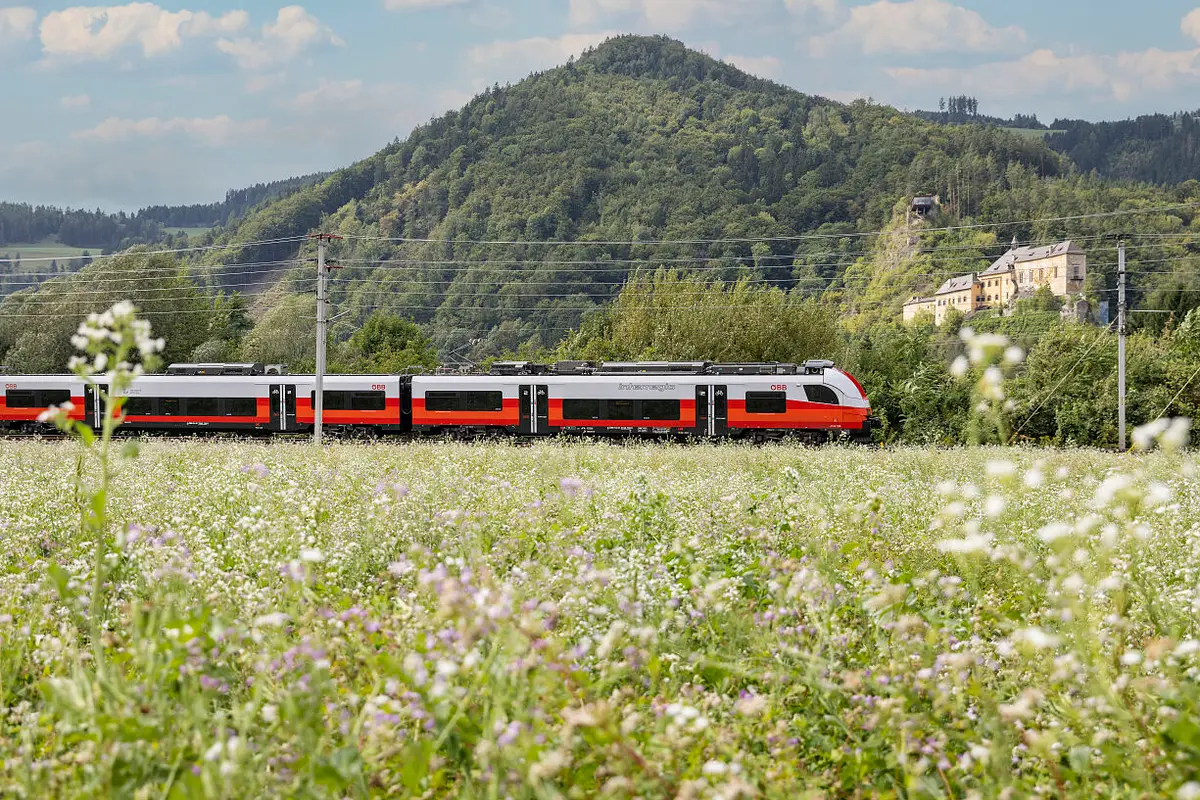
Austria’s national railway company, ÖBB, announced its 2027 train timetable this week, featuring new international connections, expanded domestic services and fleet modernisation.
The new timetable takes effect on 13 December 2026, in line with the annual schedule for updating European rail services.
Tickets are already on sale, although some new routes won't start operating until 2027. The company has also warned that major infrastructure works are likely to cause disruptions and increase journey times on key parts of the network.
What are the new international routes?
One of the main new developments is the planned resumption of direct trains between Vienna, Austria's capital, and Belgrade, Serbia's capital. The service has been suspended since 2019.
ÖBB plans to offer two daily services in each direction, with each journey taking approximately six and a half hours.
However, Hungarian authorities still need to authorise the service for trains to pass through Hungarian territory, so there's still no confirmed start date for the first trips.
Those travelling to Italy will also have new options. From the European summer of 2027, Frecciarossa high-speed trains are set to run between Munich in Germany and the Italian cities of Milan and Rome, via Innsbruck in western Austria.
The connection is being developed in partnership with Deutsche Bahn, the German rail operator, and Trenitalia, the Italian rail operator.
Following the modernisation of the railway line between Passau and Nuremberg, ICE high-speed services will once again serve destinations including Nuremberg, Frankfurt, Dortmund and Berlin.
Vienna will have ten ICE connections to Nuremberg, plus a new daily return service to Dortmund.
Another new development is the planned introduction of a night-time ICE service between Vienna and Stuttgart. Two new direct EuroCity services will connect Vienna to Košice in eastern Slovakia via Bratislava and Žilina.
From summer 2027, a Railjet Xpress service departing from Bregenz in western Austria and passing through Vienna will be extended to Bratislava. Another train will run from Bratislava to Zurich, passing through Austria's capital.
READ ALSO: Deutsche Bahn plans more Italy rail links via Austria from 2027
What changes will there be to travel within Austria?
Passengers travelling between the Austrian states of Styria and Carinthia will have more rail options.
ÖBB will expand its Interregio services between Graz and Villach, using the Koralm railway, which opened in December 2025.
The new line significantly reduced journey times between Graz and Klagenfurt and was among the major changes to Austria's rail network in 2026.
The expansion will include additional early-morning and late-evening services.
New services include a weekday train departing from Graz at 4:48 am and arriving in Klagenfurt at 5:47 am, with connections to Villach and Salzburg.
From July 2027, three new InterCity trains will run daily in each direction between Graz and Linz. This will bring the total number of direct connections between the two cities to 11 per day in each direction.
Trains between Graz and Maribor in Slovenia will also stop at Graz Airport.
Other regions will see improved local services, including more rail connections to Vienna Airport, faster journeys between Wolfsthal and Vienna, more trains between Eisenstadt and Wulkaprodersdorf, expanded services between Vienna and Wiener Neustadt, and new options between Wien Westbahnhof station and Eichgraben/Altlengbach.
In Vorarlberg, in western Austria, new direct international services will also improve rail links with Switzerland and Germany.
READ ALSO: Everything you need to know about travelling by train in Austria
Which routes will experience disruptions and delays?
Despite the expansion of train services, passengers travelling between Salzburg and western Austria should expect longer journey times in 2027.
Between 8 February and 9 July, the railway section between Freilassing and Rosenheim in Germany will be completely closed for infrastructure works.
The line, known as Deutsches Eck, serves trains connecting Salzburg with western Austria via Germany. The closure will affect passengers travelling to Tyrol, Vorarlberg and Zurich.
According to the Austrian public broadcaster ORF, some journeys could take up to two hours longer.
Depending on their destination, passengers will need to use replacement buses or trains on alternative routes, including those passing through Zell am See.
Railjet Xpress trains between Vienna and Munich will also be diverted via Passau.
At the same time, the Tauern railway line, between Schwarzach-St. Veit in Salzburg and Mallnitz-Obervellach in Carinthia, will be fully closed for a new phase of modernisation works.
ÖBB has said it's working with Deutsche Bahn to organise alternatives during the disruptions.
Passengers are advised to check updated timetables before travelling, especially when connecting to other trains or flights.
READ ALSO: Why Deutsche Bahn’s track renovations will cause major disruption in Austria
Will train tickets become more expensive?
Yes. ÖBB has confirmed that standard ticket prices and Vorteilscard discount cards will increase by an average of 3.5 per cent from 13 December. The increase will apply to standard first- and second-class fares, as the company previously announced.
However, the base prices for Sparschiene promotional tickets will remain the same.
According to the company, passengers who book in advance or online will continue to have access to discounted fares.
The pricing structure for Business Class will also change.
Currently, an upgrade is available for a fixed additional fee. Under the new policy, the price will vary with demand and each train's occupancy.
In practice, passengers who book in advance or travel at less busy times may pay less to travel in this class.
READ ALSO: What Austrian travellers need to know about the ÖBB ticket price increases
Train fleet renewals
ÖBB has announced plans to put 57 more trains into service throughout 2027 as part of its modernisation programme.
Among the new rolling stock are 27 double-decker Cityjet regional trains, 14 double-decker Railjet trains for long-distance journeys, ten new-generation Railjet trains and six Coradia Stream trains intended for international regional services between the Austrian Tyrol and South Tyrol in Italy.
The new Coradia Stream trains should enable journeys between the two regions without changing trains at the Brenner border.
ÖBB says it is investing about €6.1 billion to acquire and modernise 330 trains by 2030.
READ ALSO: Travel in Austria: New ÖBB double-decker trains to enter service in June
When do ticket sales for 2027 begin?
Advance ticket sales for the new train timetable opened on 14 October 2026.
Passengers can already check available routes using ÖBB’s SCOTTY journey planner.
Tickets can be purchased via the company’s app, online shop, self-service machines and at ticket offices in railway stations.
ÖBB advises passengers to check their journey again shortly before departure, even if they've already bought their tickets.
READ ALSO: Planning a Nightjet trip in Austria? You can now book train tickets almost a year ahead
Understanding the key terms used on the Austrian railways
Fahrplanwechsel: timetable change. The term is usually used to refer to the annual update of the train timetable, which takes place in December.
Schienenersatzverkehr: replacement transport service, usually provided by buses when a railway line is disrupted.
Sparschiene: a type of promotional ticket offered by ÖBB, with limited availability and prices that are usually lower for advance bookings.
Vorteilscard: an ÖBB discount card that allows you to buy tickets at reduced fares.
Comments