
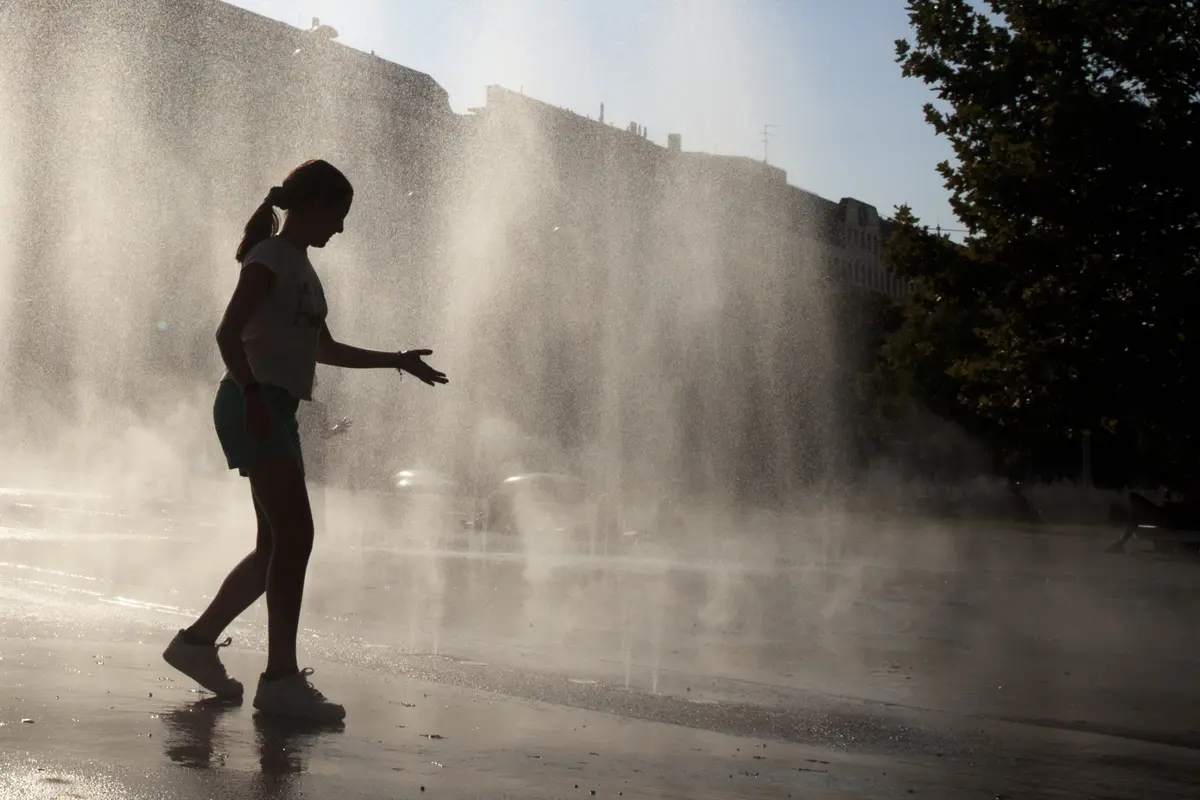
If you've spent time in Austria this summer, you've probably had to find ways to manage the extreme heat.
Since June, there have been several prolonged heatwaves that have led to record temperatures. In the first week of August, the Mercury reached 41.2C in Bad Deutsch-Altenburg, Lower Austria.
It came a day after Vienna-Stammersdorf recorded 41C, surpassing Austria’s previous temperature record.
This kind of heat makes getting on with daily tasks difficult, with many people unable to sleep properly or even go outside. The Austrian Agency for Health and Food Safety (AGES) recently estimated 395 excess deaths related to heat in June alone.
Meanwhile, a prolonged drought has caused havoc to crops and rivers, while the sweltering temperatures have also disrupted schools and the transport system.
With all of this in mind, The Local asked Austria's official climate and weather service institute to help explain what's going on and what we can expect in future.
READ ALSO: Can Austria make schools safer during heatwaves?
These summers are 'not the norm'
While summer weather can vary year-to-year, meteorologists around the world agree that climate change is becoming an ever-present part of our lives.
Andreas Tröscher, press spokesman for GeoSphere Austria, told The Local Austria that this summer's intense heat spells are anything but normal.
"They are the result of ongoing, man-made global warming," he said. "As a general rule, heatwaves are becoming longer, hotter and occurring earlier in the year. See this year: June with temperatures of 40C."
Tröscher said natural weather patterns also influence the weather. "The El Niño phenomenon certainly plays a part as well, even though its impact on Austria is traditionally less significant than in other regions of Europe," he said.
The extreme heat comes from "high-pressure systems that are becoming increasingly sluggish and stable, with air masses shifting more slowly," he added.
READ ALSO: How long will Austria's latest extreme heat spell last?
One aspect many readers of The Local have noticed is the lack of air conditioning systems. While in many other hot countries, like the USA and Brazil, offices, gyms and schools are fitted with A/C, that is not the case in Europe.
So with heat intensity set to become more of an issue in future, will people in Austria finally embrace air conditioning?
According to Tröscher, this is only one part of the debate. "Air conditioning systems can only alleviate the heat stress in specific, individual cases and, moreover, consume a great deal of electricity, the generation of which in turn has an environmental impact, unless it comes from wind power or solar energy," he said.
Tröscher pointed to other steps to help cool people – and the atmosphere – down.
"Climate protection measures such as greening and preventing further soil sealing are important, as is the careful management of groundwater during periods of drought," he said.
READ ALSO: OPINION: Austria’s hatred for air conditioning is just cultural stubbornness
Forecasts this week are showing no signs of real respite from high temperatures. On Monday highs of 34C were expected in Graz and Linz, with Vienna set to see 31C. Thunderstorms are also forecast.
Experts are warning people to take extra precautions during this red-hot summer.
"Extreme heat places an enormous physical strain on the elderly and/or those in poor health in particular," said Tröscher.
"However, even for young, fit people, extreme heat lasting several days is unhealthy. Cooling off in a swimming pool and drinking plenty of fluids help to protect the body. Outdoor activities are strongly discouraged unless absolutely necessary."
READ ALSO: Why Austria’s brief heat break won’t end summer’s problems
Comments