
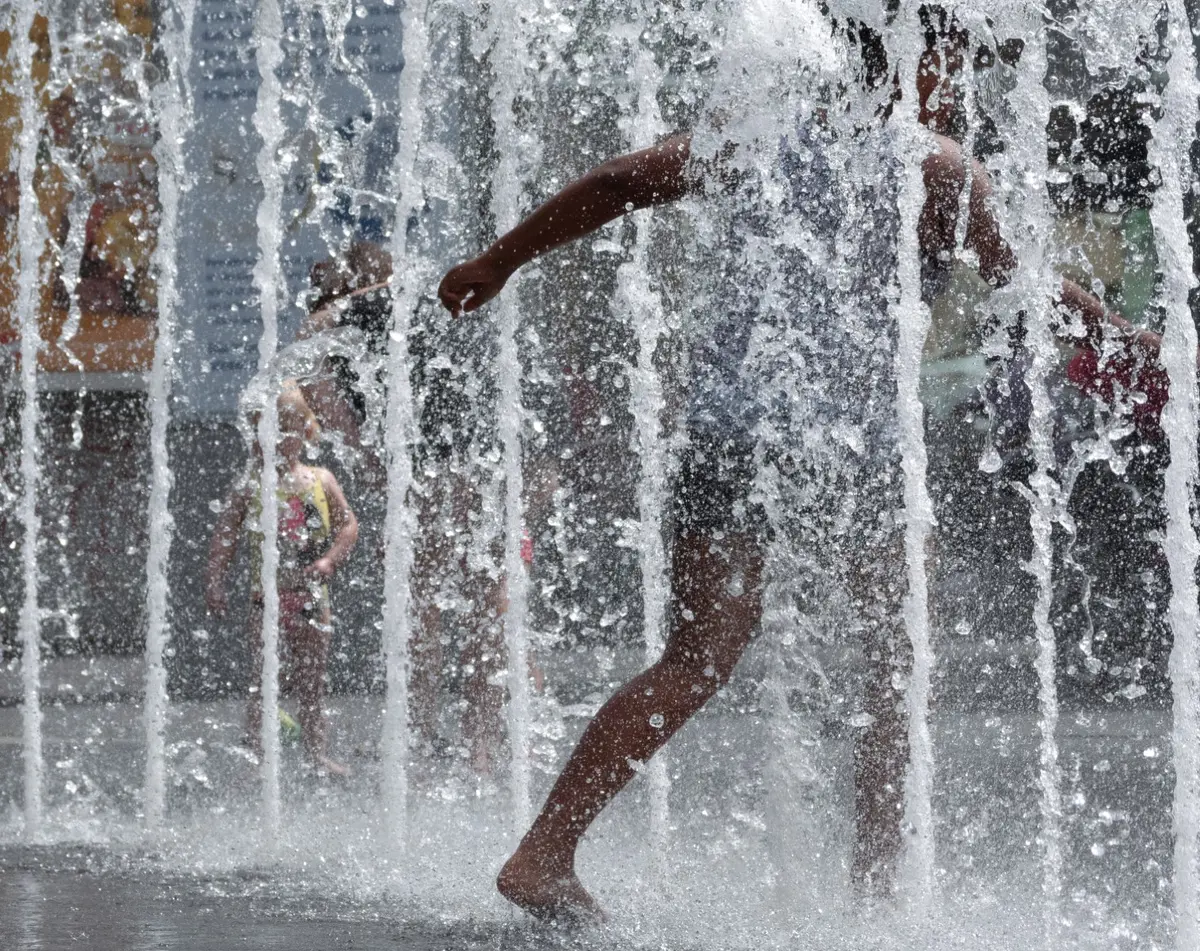
Life in Austria has been unbearable in recent days.
On Sunday, Vienna saw temperatures of 40C – an all-time June record for Austria, and only the second time it's become this hot.
It has resulted in medical emergencies across Austria. Across Europe, more than 1,300 excess deaths linked to the high temperatures have been recorded since June 21st.
Widespread travel disruption has hit the road and rail network in Austria due to the soaring heat, while people have been unable to sleep or get through the days as normal.
READ ALSO: Extreme heat - how hot weather has affected life in Austria
Schools are also feeling the effects. The increasing number of hot days in June are pushing pupils, teachers and support staff to their limits as temperatures in some classrooms climb well above 30C.
On Monday morning, parents said a classroom at Vienna's Lange Gasse primary school in the eighth district had reached 35C.
In a statement reported by Der Standard, concerned parents from one class questioned how seven-year-old children were expected to concentrate in such conditions.
According to the parents, only seven children attended their first-year class on Monday instead of the usual 30, with many families taking leave from work to keep their children at home.
The issue is that Austrian schools typically do not have air conditioning, so they are relying on electric fans and ventilation.
Vienna’s City Councillor for Education, Bettina Emmerling (NEOS), last week proposed bringing forward the summer holidays as a possible solution.
"If the heat rises dramatically in June and, at the same time, we see that from mid-August, for example, the days become shorter and the nights cooler – which would also allow for more effective cooling of the classrooms – then we can give it some thought and discuss whether we should bring the summer holidays forward," said Emmerling.
Austria's Education Minister Christoph Wiederkehr (NEOS) announced that he would examine the proposal.
Schools in Vienna break up in just a week, with the holidays running from July 4th to September 6th. However, for many it is simply too hot as things stand.
READ ALSO: When are Austrian's school summer holidays in 2026?
'Not cooling down'
Melanie Rössler, Vienna's FSG representative for compulsory schools, said reports of classroom temperatures reaching 35C had already been coming in since last week.
"It's still very hot and it's becoming even hotter," she said, adding that "it hasn't cooled down".
She said many schools had begun finding their own solutions, including opening windows overnight where possible in an attempt to cool classrooms before pupils arrived in the morning.
Thomas Krebs, a compulsory schools union representative with the Christian teachers' union (FCG), said principals and teachers across Vienna had also reported extreme temperatures inside school buildings.
He said some school caretakers had voluntarily arrived very early in the morning to ventilate buildings before classes began.
According to Krebs, even cooler areas such as basements and ground-floor rooms had reached more than 32C, while some classrooms were significantly hotter.
He said both pupils and teachers had already experienced circulatory problems because of the heat, adding that quality learning was no longer possible under such conditions.
Why can't schools simply send children home?
While it is common practice in neighbouring Germany to send pupils home from classrooms during extreme heat in a practice known as 'Hitzefrei', this doesn't exist in Austria.
"There is no legal basis," Rössler said.
Instead, she said some schools have been allowing parents to collect children earlier in the day where possible, while others have made it easier for parents to excuse their children from lessons.
Both Rössler and Krebs said Austria now needed clear legal rules governing school attendance during periods of extreme heat.
"Yes, the school must ensure supervision, but attendance at school does not have to be enforced at all costs," said Thomas Krebs, another representative with the Christian teachers' union FCG.
Rössler said she hoped rules would be in place before next summer.
However, neither Rössler or Krebs believe bringing the summer holidays forward is the answer.
They said it doesn't solve the problem, because it could get hot again in August and even September.
READ ALSO: What Austria's new heat rules mean for workers this summer
What's the reaction from others?
Paul Kimberger, chair of the Teachers' Working Group within the Public Service Union (GÖD), has also expressed doubts about bringing the holidays forward.
Instead, he argued that schools need long-term investment in cooling measures, including ventilation systems, air conditioning and fans, potentially powered by rooftop solar panels.
The Vienna People's Party has called on Emmerling to give schools more flexibility and quickly introduce simple measures to improve classroom temperatures.
Teachers' union representatives from ÖLI-UG have gone further, calling for all of Austria's roughly 6,000 schools to be equipped with energy-efficient ventilation and air-conditioning systems.
They argue that overheating and poor air quality are affecting children's concentration and health.
"Climate-friendly classrooms are not a luxury investment, but a prerequisite for modern education – and not just in new buildings," said chairwoman Claudia Astner.
Comments (3)