

Judge Norbert Hofer convicted Thomas P. on Thursday evening and handed down a five-month prison sentence, suspended for three years, plus a fine of €9,600. The court heard 15 witnesses throughout the day. Thomas P. had pleaded not guilty.
Kerstin G., 33, died of hypothermia after the couple got into difficulty on the 3,798m mountain in stormy winter conditions. The trial focused on whether Thomas P. had a particular duty of care as the more experienced mountaineer, and whether a chain of decisions on the mountain amounted to gross negligence.
READ ALSO: What risks Austria’s mountain rescue says hikers and skiers often underestimate
What prosecutors said Thomas P. did wrong
Prosecutors accused Thomas P. of a series of serious errors that, taken together, allegedly led to Kerstin G.’s death.
They argued he chose the Stüdlgrat route – the hardest one – in winter, despite her lack of experience on a high-altitude tour of that length, difficulty, and altitude, and despite challenging conditions. Prosecutors criticised what they described as inadequate emergency planning and equipment.
Another major allegation concerned Kerstin G.’s equipment. Prosecutors said Thomas P. had allowed her to climb with a splitboard and soft snowboard boots, which they argued were unsuitable for a high-altitude winter tour in mixed terrain.
They also said the couple should have turned back at the latest at a point known as the Frühstücksplatzl (a point of no return) because of strong to stormy winds, reported at up to 74 km/h, and temperatures of around minus 8C. With wind chill, prosecutors said the “felt” temperature was around minus 20C.
Prosecutors further alleged that Thomas P. failed to make an emergency call in good time before nightfall, gave no distress signals to a police helicopter that flew over later that evening, and then waited until 3:30 am to contact rescue services clearly.
Finally, they accused him of failing to move Kerstin G. to a spot as sheltered from the wind as possible, thereby increasing the risk of heat loss.
READ ALSO: Why getting rescued in the Austrian Alps could cost you thousands
The defendant’s version of the night
Thomas P. told the court he and Kerstin G. had made decisions together and insisted he had not “led” the tour in the way prosecutors suggested.
He described himself as a hobby mountaineer who had largely taught himself. He said he had climbed the Großglockner 14 or 15 times via different routes, including four times via the Stüdlgrat, and that he had also climbed the mountain in winter before.
He also told the court his girlfriend slipped at a “key point” on the route and swung on the rope, injuring her hip and one hand, but still managed to get through that section.
The court heard that at 6:07 pm, Kerstin G. texted her mother saying: “We’re done with the tour.” Thomas P. said he did not know about that message.
Judges also referred to phone data indicating that at 5:30 pm Kerstin G. tried to dial 149 (a non-existing number), while noting that the mountain rescue number is 140. Thomas P. said he had no explanation for that.
Kerstin’s mother testified
One of the first key witnesses was Kerstin G.’s mother, who described her daughter as fit and determined, and said she had been training in the mountains since 2020.
She told the court her daughter “wouldn’t have gone along blindly”, and said she assumed Kerstin would have checked safety information before setting out. At the same time, she said she did not know who planned the Großglockner tour or whether there had been a clearly agreed return plan.
When asked about the relationship between Kerstin and Thomas P., she said it was on equal terms.
READ ALSO: How to keep safe and avoid problems when hiking in the Austrian Alps
The surprise witness: an ex-girlfriend
Later in the day, the court heard from a former partner of Thomas P., 32-year-old Andrea B., who said she and the defendant had been a couple from May 2023 to September 2023 and had gone on several mountain tours together.
Andrea B. told the court Thomas P. was generally attentive on the mountain, but that when difficulties arose, he could become unpleasant and dismissive. She recalled him saying things like “Don’t be such a baby” when she was afraid.
She also described a specific incident on a previous hike when, after a tense moment, she said Thomas P. went ahead and left her alone in the dark when her headlamp stopped working. She said she cried and screamed and that he was suddenly gone. She told the court that it was the last mountain hike they did together – and it was also the Großglockner (but in summer and milder weather).
READ ALSO: Why the trial over the deadly Grossglockner ascent has gripped Austria
How the judge explained the guilty verdict
Hofer, a mountain rescuer himself, said he reached his verdict with “massive reductions” to the prosecution’s original allegations. Addressing the defendant directly, the judge told him: “You are an excellent mountaineer”. But the judge said Thomas P. struggled to adjust from his own abilities to someone else’s.
A key point in the judge’s reasoning was what happened at the Frühstücksplatzl, where he said the point had “definitely” been reached to turn back. With Thomas P.’s alpine experience, he should have recognised that Kerstin G.’s abilities were not sufficient and that the continued ascent would be “incredibly” exhausting for her.
The judge described a “flagrant imbalance” between the pair as climbers and said Kerstin G. had placed herself in Thomas P.’s care. In that context, he told the defendant: “You haven’t been convicted because you’re better,” but because the case met the threshold for what the court considers “leading out of courtesy” (how the most experienced hiker has more responsibilities towards the group) and the duties that come with it.
He highlighted that Kerstin did not have nearly enough experience, particularly in winter or mixed terrain, to keep up in a hike like that under those conditions.
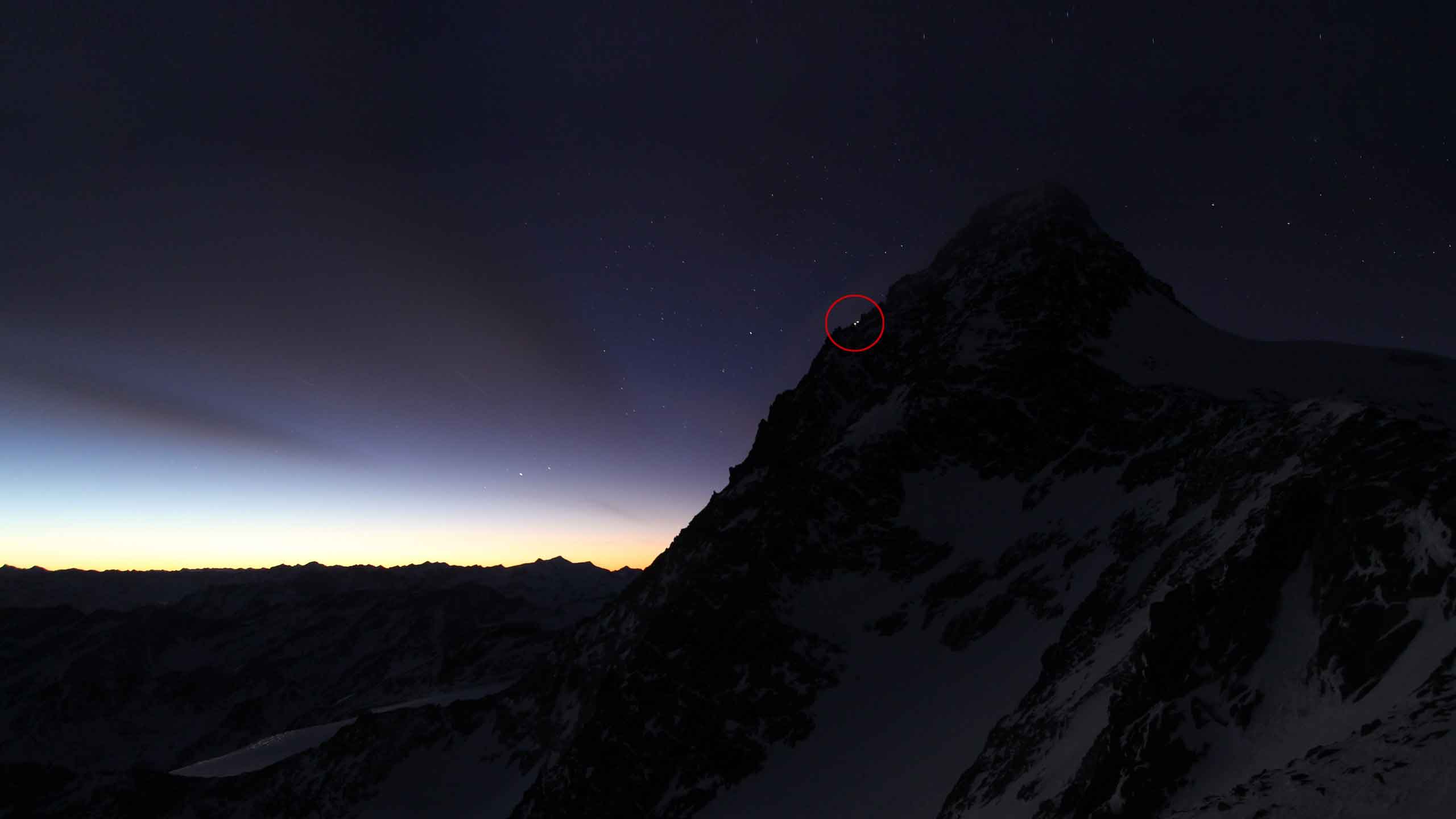
Hofer said the flyover by the police helicopter would have given the defendant an opportunity to make an emergency call. He noted that Kerstin G. would also have been able to make an emergency call, adding: “I do not underestimate her contributory negligence.”
READ ALSO: How climate change threatens Austria's Alpine refuges and trails
The judge also referred to Kerstin's attempted call to 149, saying “nine is damn close to zero” and pointing out that 140 would have reached mountain rescue.
At the same time, Hofer said he decided against filing a more serious charge of abandonment. He said he assumed Kerstin G. was “de facto blocked” and could not move further.
However, he said it would have been “easily possible” for Thomas P. to care for her in a way that would have allowed her to survive, for example, using emergency blankets. Instead, she was left in an area the judge described as a place “where one loses the will to live”.
Hofer also said he did not believe Thomas P. descended to the Adlersruhe winter room simply to save himself. Instead, he said the defendant was trying to reach a shelter as quickly as possible and find people who could help.
At the end, he said gross negligence was "fulfilled in any case due to the cumulative circumstances". He told the defendant: "You did not fulfil the leadership responsibilities you assumed in the manner required of you by law."
Guilty, but no prison time
The maximum sentence in the case was up to three years’ imprisonment. The court imposed a five-month prison sentence, but suspended it for three years.
In practice, that means Thomas P. will not go to prison unless he commits another offence during that three-year period or otherwise breaches conditions attached to the suspended sentence. If he does, the court can order the original five-month term to be served.
In addition to the suspended prison term, the judge imposed a fine of €9,600.
The verdict is not final and could be appealed – both defendant and prosecution have three days to decide if they will seek a different verdict at a higher court.
READ ALSO: Who to call and what to say in an emergency in Austria
Key vocabulary
Landesgericht – regional court
grob fahrlässige Tötung – grossly negligent homicide
Führer aus Gefälligkeit – “leader out of courtesy”, a person treated as having assumed responsibility for leading a tour
Alpinpolizei – alpine police unit
Bergrettung – mountain rescue service
Stüdlgrat – the Stüdlgrat ridge route on the Großglockner
Comments