
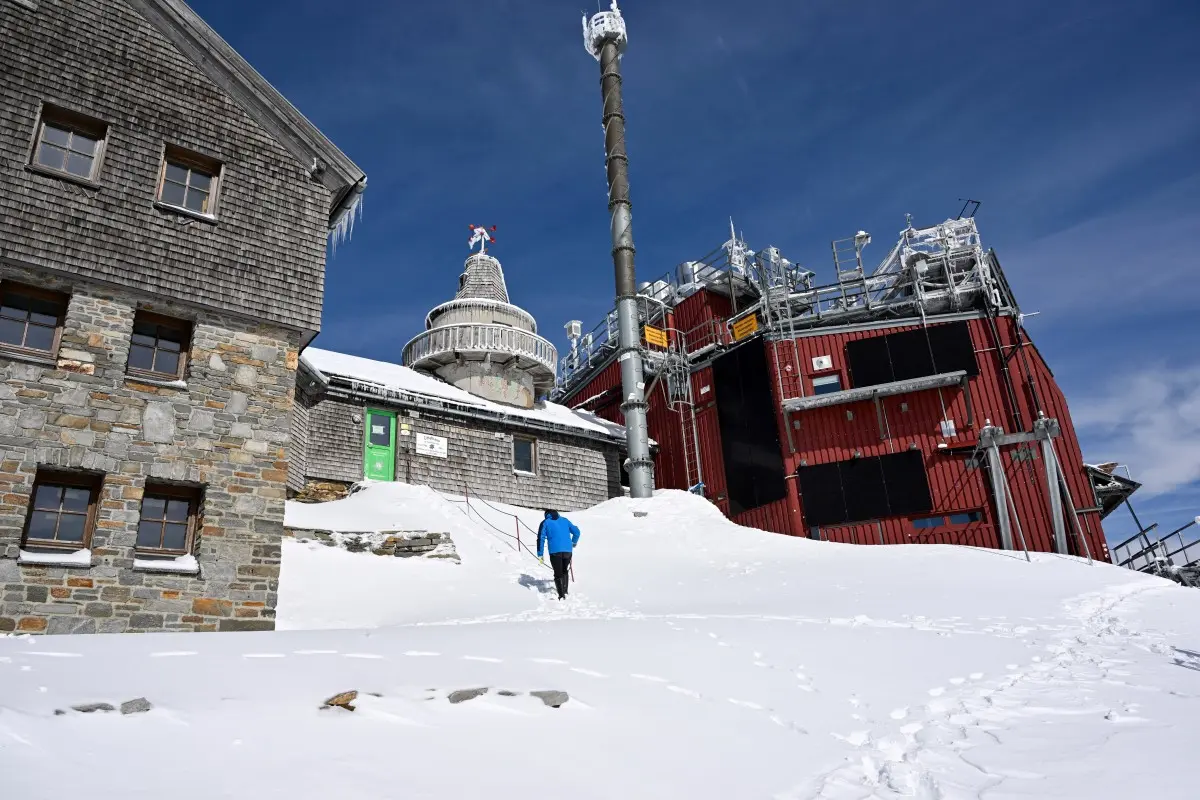
The historic Zittel hut on top of a snow-capped mountain high in the Austrian Alps has weathered many a storm.
But ever more extreme climate change is taking a terrible toll on the century-old wooden refuge.
"When your hand fits into a crack in the foundation, there is a need for action," said Georg Unterberger, who is in charge of mountain refuges and trails at the Austrian Alpine Club.
The trails up to refuge on the 3,106-metre (10,190-foot) Sonnblick mountain are also suffering.
Experts say warmer temperatures across the Alps are accelerating glacier melt and thawing permafrost, the year-round ice that binds together giant slabs of rock.
READ ALSO: Why Austria's famous Alpine huts are facing closure
This has increased the danger of sudden rockfalls and landslides, damaging paths and putting more pressure on the often ageing and neglected huts.

Austria's Alpine clubs are currently closing up to four huts a year as they become unsafe or too costly to maintain.
With the country heavily dependent on Alpine tourism, Unterberger, who also works as a building surveyor, said the cost of maintaining the trails "has doubled in the last five years."
About one million people visit the more than 200 mountain huts the Austrian Alpine Club—the country's biggest club —operates each year.
READ ALSO: Our guide to visiting a traditional Austrian mountain hut
'Struggling on all fours'
The trail up to the Zittel in the Salzburg region was always a black-rated one, but "now it's even more dangerous", Unterberger told AFP.
Hikers may now need climbing gear to reach it as the retreating glacier that once went all the way up to the popular refuge has exposed steep rock faces and vast fields of scree.
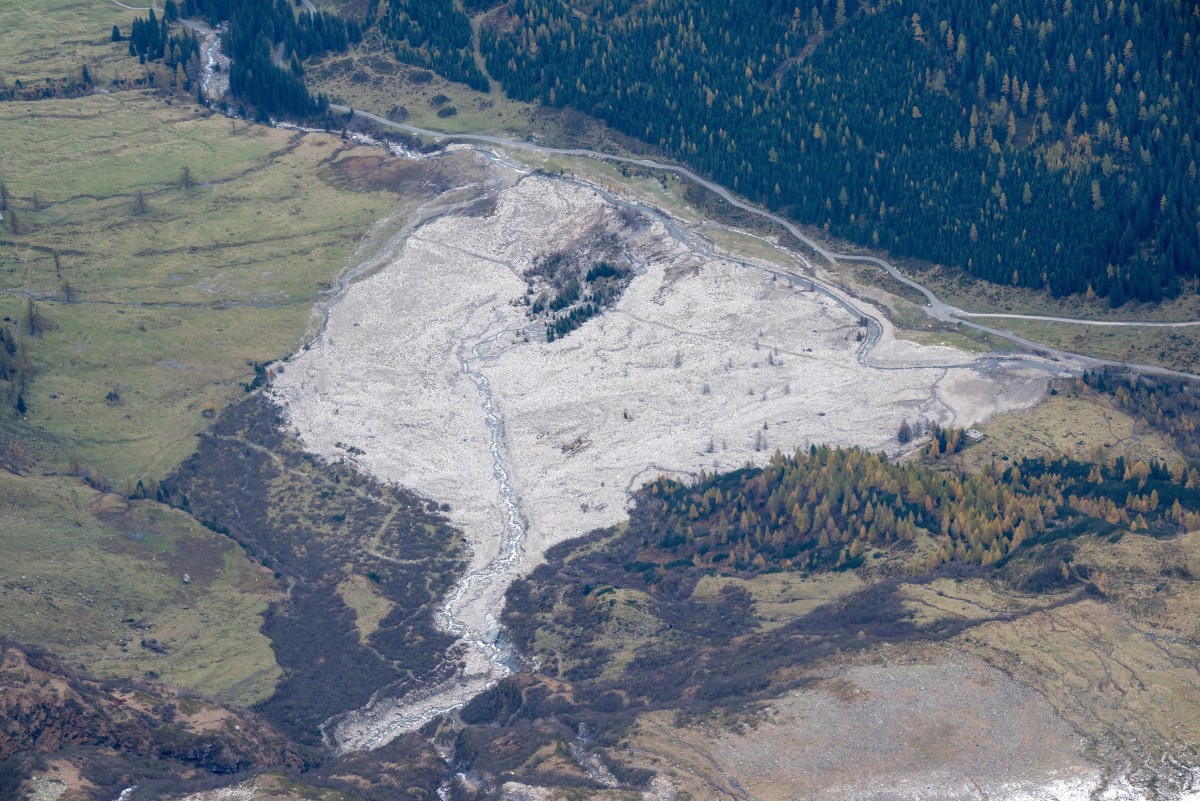
"I've seen hikers struggle on all fours to make it," Unterberger said, adding that work on trails has dramatically increased in recent years, with ropes and steel rungs having to be put in place.
READ ALSO: How to keep safe and avoid problems when hiking in the Austrian Alps
The crumbling foundation and the weather-worn wooden shingles at the Zittel hut require urgent renovation and thermal insulation.
Thawing permafrost threatened the very existence of the hut and the adjacent observatory -- one of the world's oldest high-altitude weather stations -- already years ago, with the peak at risk of falling apart.
To prevent it from disintegrating, workers rammed steel anchors 20 metres into the mountain's top and supported the summit further with concrete braces.
The peak is stable for now, but further measures cannot be ruled out.
More money is needed to remedy the decaying infrastructure in the Austrian Alps. Experts say 272 out of 429 mountain refuges and 50,000 kilometres (31,000 miles) of trails are in dire need of repair.
In a petition earlier this year, the cash-strapped Alpine clubs urged the government to provide an emergency fund of €95 million ($103 million).
So far, the government has pledged just three million euros.
READ ALSO: Why getting rescued in the Austrian Alps could cost you thousands
Unlike in neighbouring Switzerland, where the cantons are in charge of maintaining the trail network, Austrian Alpine clubs heavily rely on ever-scarcer volunteers.
"Many of our 25,000 volunteers are more than 65 years old, and recruiting young people has been a challenge," said Unterberger, observing a trend towards "micro-volunteering" for a few hours or a day, but not more.
'Critical situation'
The Zittel refuge shares the summit with the Sonnblick observatory, which has been measuring and documenting the changes to climate since it opened in 1886.
The temperature has been recorded on the mountain for 138 years straight, the longest uninterrupted high-altitude data anywhere in the world.
This data helps scientists worldwide refine their climate models and offers a glimpse into the future.
READ ALSO: Austria pivots towards mountain bike tourism as Alps warm
Observatory head Elke Ludewig told AFP that since the 1950s, all high mountain regions—"the Alps, the Rocky Mountains, the Andes, the Himalayas—have already seen an average annual temperature increase of more than two degrees Celsius," which is twice the global average.
"As nice as it is to still see snow and glaciers, we really have a critical situation here in terms of the rate at which temperatures are increasing," she said.
Comments