
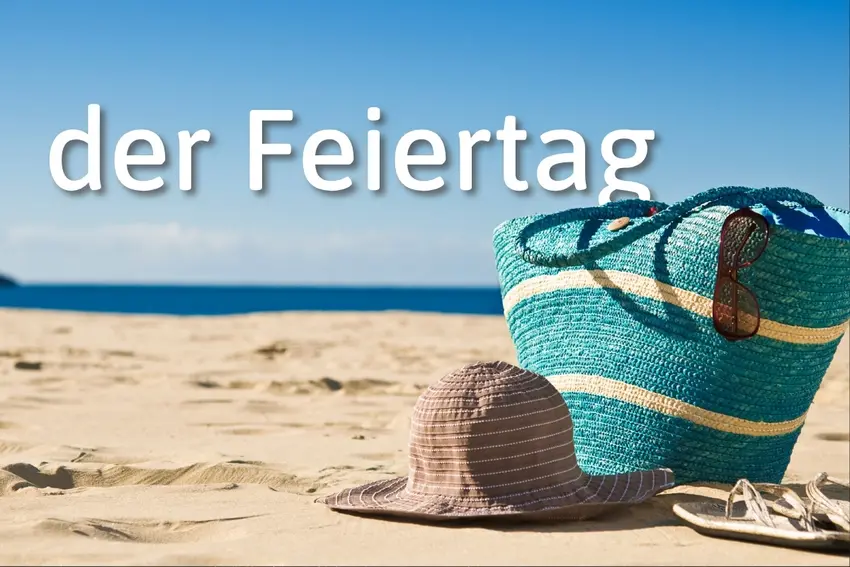
Why do I need to know Feiertag?
Feiertag means public holiday, and it’s a key word to know if you live or work in Austria. With several public holidays falling in late spring—like Christi Himmelfahrt, Pfingstmontag, and Fronleichnam—many Austrians take a Fenstertag (bridge day) on Friday to create a langes Wochenende (long weekend).
Shops may be closed, pharmacies operate on reduced hours, and trains can be packed. Knowing which day is a Feiertag will save you from showing up at the supermarket or post office to find the doors locked.
What does it mean?
Der Feiertag (pronounced like this) is a compound of Feier (celebration) and Tag (day). It refers to legally recognised holidays when businesses, schools, and public offices close. In Austria, many Feiertage are tied to Catholic traditions, but they’re observed nationally regardless of individual religious belief.
Some of the most widely observed Feiertage in Austria include:
– Neujahr (New Year’s Day – January 1st)
– Christi Himmelfahrt (Ascension Day – 40 days after Easter)
– Nationalfeiertag (Austrian National Day – October 26th)
– Allerheiligen (All Saints’ Day – November 1st)
– Weihnachten (Christmas – December 25th and 26th)
Use it like this:
Am Feiertag sind die meisten Geschäfte geschlossen.
(On public holidays, most shops are closed.)
Wir nutzen den Feiertag für einen Ausflug in die Berge.
(We’re using the holiday for a trip to the mountains.)
Donnerstag ist ein Feiertag – nimmst du Freitag frei?
(Thursday is a holiday – are you taking Friday off too?)
So whether you're booking a weekend away or wondering why the supermarket is suddenly closed, Feiertag is a word that shapes Austrian routines—and offers a built-in excuse to relax.
Comments