
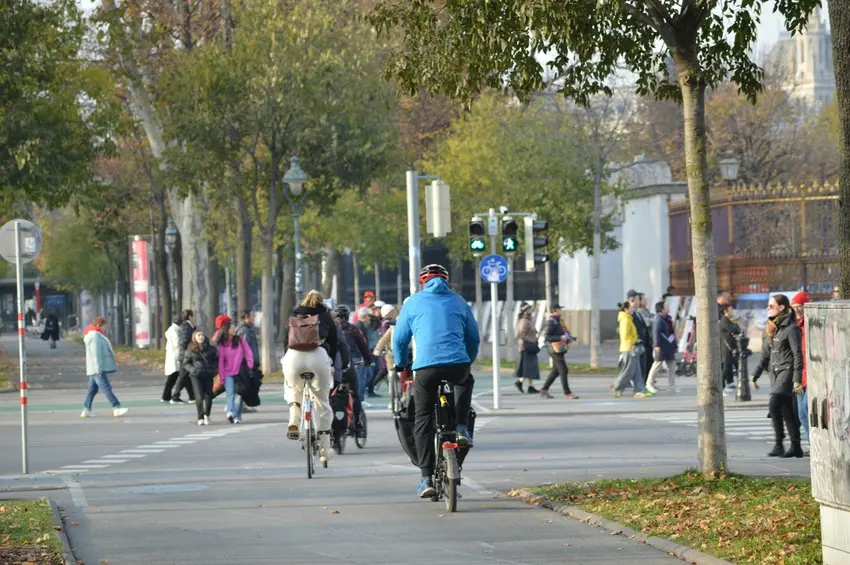
Helmet laws in Austria are surprisingly relaxed - but that doesn’t mean you won’t face consequences for riding without one.
Whether you’re pedalling through Vienna’s Prater park or commuting to work on an e-bike, Austria is a fantastic country for cycling. But if you’re wondering whether wearing a helmet is mandatory, the answer is: it depends on your age, your bike, and how much risk you’re willing to take.
Here’s what you need to know.
Is it compulsory to wear a helmet when cycling in Austria?
Only for children under 12. In Austria, anyone under the age of 12 is required by law to wear a helmet when cycling - including if they’re sitting on the back of someone else’s bike.
Once you turn 12, however, helmets are no longer mandatory. Adults are free to cycle without one, and you won’t be fined for riding helmet-free. That said, helmets are strongly recommended, especially in cities or on busy roads.
Austria’s cycling laws are laid out in the Road Traffic Act (Straßenverkehrsordnung), which applies to both motor vehicles and bicycles. Cyclists must follow the same rules of the road, from stopping at red lights to giving way at junctions. But when it comes to helmets, the law stops short of making them compulsory for everyone.
You can read more about Austria's cycling laws HERE.
What about e-bikes - is the rule the same?
Yes, for the most part. If you’re riding a standard e-bike that meets EU specifications - maximum 250W power and a top speed of 25km/h - then the rules are the same as for regular bikes: no helmet required unless you’re under 12.
However, that doesn’t mean there are no consequences for riding without one.
A recent Supreme Court ruling found that e-bike riders who suffer a head injury caused by someone else may receive reduced compensation if they weren’t wearing a helmet. In this case, the court ruled that the rider bore contributory negligence for their injuries - even though the accident was not their fault.
“This decision comes as no surprise,” said Martin Hoffer, head of ÖAMTC’s legal services. “The lack of protective equipment was deemed to reduce the compensation for pain and suffering - similar to earlier rulings on motorcyclists and racing cyclists.”
So while helmets aren't required, not wearing one could still cost you.
Is it different for faster or more powerful e-bikes?
Yes. If your e-bike exceeds the EU’s standard power or speed limits (250W or 25km/h), it’s legally classified as a moped, not a bicycle. That means you’ll need:
- A valid driver’s licence
- Third-party liability insurance
- A helmet
These e-bikes are subject to much stricter regulations and are not covered by the same relaxed rules as pedal-assisted bicycles.
You can read more about Austria's ebike rules HERE.
What safety equipment is legally required on a bike or e-bike?
Helmet or not, your bike must be fully roadworthy. Austrian law requires:
- Two working brakes (front and rear)
- A bell or horn
- Front headlight and rear red light (non-flashing)
- Reflectors on the front (white), rear (red), pedals (yellow), and wheels
These requirements apply to both bicycles and standard e-bikes. Riding a bike without proper brakes or lights can result in fines and - in case of an accident - legal trouble.
Are there any extra safety tips?
Even if you’re not legally required to wear a helmet, Austrian officials strongly advise it, especially for e-bike users. According to ÖAMTC, riders should also wear high-visibility clothing and ensure their bikes have proper reflectors and lights.
While there are no police fines for not wearing a helmet, failing to wear one could be considered negligence in civil court if you’re injured in an accident.
Bottom line: should you wear a helmet in Austria?
If you’re under 12, the law says yes. If you’re riding a high-speed e-bike, absolutely. And if you’re on a standard bike or e-bike? It’s your choice - but wearing one could protect not just your head, but also your legal rights in the event of a crash.
Comments