
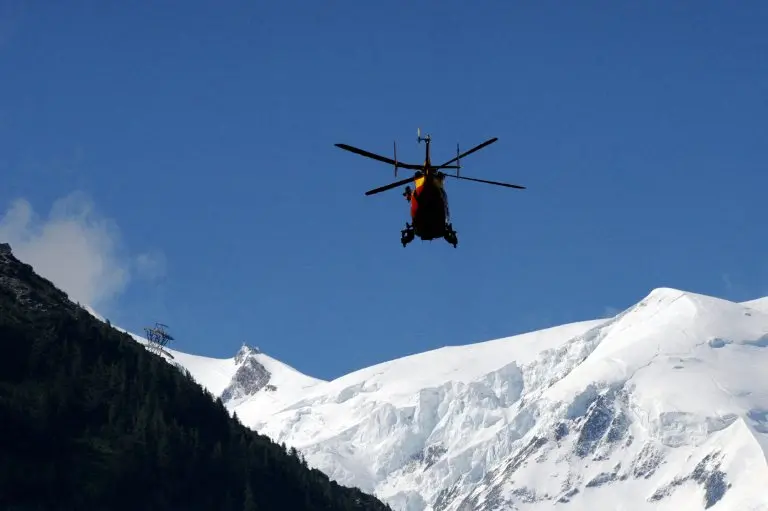
When three British skiers decided to leave the marked slopes of the Albona ski area near Stuben, Vorarlberg, on Wednesday afternoon, they probably didn’t imagine they'd soon be dangling from a helicopter or that they'd face a substantial bill afterwards.
The tourists, aged between 55 and 68, ventured into uncharted terrain in search of "good snow," according to a report by ORF. Instead, their decision landed them on steep, rocky ground—and eventually, stranded just above a sheer cliff face.
As conditions became increasingly dangerous and the leading skier found himself unable to continue safely, the trio called piste rescue services for help.
A police helicopter, "Libelle," was dispatched. It rescued the stranded skiers one by one with rope harnesses and transported them safely back to a secure location in the ski area.
But here's the twist: due to their "grossly negligent behaviour," the tourists must now pay the full cost of their helicopter rescue.
READ ALSO: Reader question: Am I liable for ambulance costs in Austria?
Why did they have to pay the rescue costs?
In Austria, rescues aren’t always free—even in emergency situations.
According to Austrian rescue and insurance regulations, if a rescue operation is deemed necessary due to reckless or negligent behaviour, or if it occurs during leisure activities like skiing or hiking, you might end up footing the bill yourself.
In this specific case, the three skiers’ decision to leave clearly marked slopes without adequate local knowledge or preparation was considered "gross negligence." Because of that, the expensive helicopter rescue becomes their financial responsibility.
How expensive can helicopter rescues get?
In Austria, helicopter rescues don't come cheap. On average, these type of rescue operations can cost around €3,500, according to a report by Kurier. However, complex rescues—especially those requiring multiple helicopter flights or extensive ground support—can quickly escalate into tens of thousands of euros.
For example, in 2022, rescuing a group of German schoolchildren in Tyrol cost approximately €18,000, a sum that included multiple helicopter flights and mountain rescue services, as previously reported.
Even false alarms can lead to hefty bills. In a memorable incident, a couple quietly camping in the Tyrolean Alps faced a €2,000 charge after locals mistook their flashlights for emergency signals, starting an unnecessary mountain rescue operation, according to ORF.
Why doesn't Austria’s public insurance cover rescues?
Austria’s public health insurance, such as the Österreichische Gesundheitskasse (ÖGK), generally does not cover air rescues related to leisure or sporting accidents—particularly common in a mountainous country where skiing and hiking are popular.
READ ALSO: Should I take out insurance before skiing in Austria?
The ÖGK explicitly states that it only covers air transport costs if the patient is in immediate danger of death and if air transport is medically necessary. Crucially, this explicitly excludes "accidents in the practice of sport and tourism on the mountain".
That means if you have a skiing or hiking accident that requires a helicopter rescue, you could receive an expensive surprise in your mailbox. Even if you have Alpine insurance, the private companies often include a clause exempting them from payment in case of gross negligence of the insured parties.
How can tourists avoid costly rescue charges?
If you plan on skiing, hiking, or enjoying Austria’s outdoor adventures, there are several things you should do to avoid unexpected rescue charges:
- Get appropriate insurance: Consider personal travel or winter sports insurance explicitly covering helicopter rescues and mountain rescue operations.
- Join a local association: Austrian Alpine Association, Austrian Ski Association (ÖSV), or ÖAMTC memberships typically include rescue insurance coverage in their annual fees.
- Always ski and hike responsibly: Stick to marked slopes and trails, and heed all warnings and local advice. Venturing off-piste might seem exciting, but it significantly increases risk—not just physically, but financially as well.
READ ALSO: Everything foreigners need to know about the Austrian healthcare system
Comments (2)