
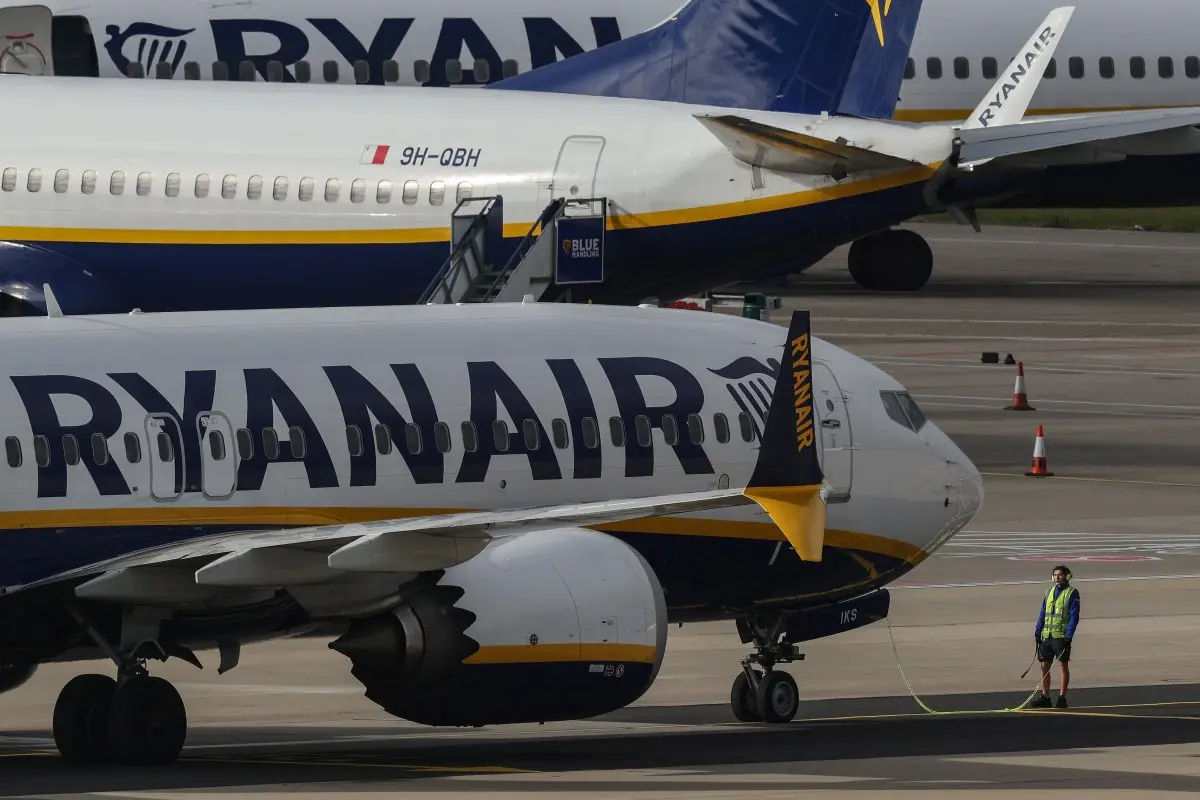
Chief executive Michael O'Leary said Ryanair's fuel bill is expected to rise by 2.0 billion euros ($2.24 billion) in its next financial year, which could prompt cost-saving measures such as temporary pay freezes, lower cabin crew ratios and greater use of artificial intelligence in back-office operations.
The announcement came as profit after tax fell six percent to 1.61 billion euros in its second quarter, or three months to end-September, from one year earlier, the Dublin-based carrier said in a statement.
Ryanair, which is Europe's biggest airline by passenger numbers and flies mainly across the continent, said the cost of fuel not subject to advance purchase agreements had soared owing to the US-Iran war.
"Unless there is a swift resolution of the Middle East conflict, we expect jet-fuel prices to remain elevated well into 2027," O'Leary said in an earnings statement.
For its current financial year to the end of March, Ryanair has hedged 80 percent of its fuel needs at around $67 a barrel, well below current market levels.
But for 2027–2028, only a quarter of its needs are hedged so far, at a higher price of around $95 a barrel -- but still below current levels.
'Double-digit fare hikes'
Ryanair added Monday that its revenue increased four percent to 5.7 billion euros in its second quarter.
While passenger traffic grew five percent, fares fell two percent as the war led to consumer hesitancy and later bookings.
However, O'Leary said that fares would have to rise next year to cope with rising fuel costs.
"We're certainly looking at double-digit (percentage) fare increases across Europe from all airlines in 2027," he said in a video released alongside the second-quarter earnings.
Dan Coatsworth, head of markets at AJ Bell, said "many airlines have navigated this year's oil price spike thanks to forward hedging, having locked in large swathes of fuel costs before the Iran war".
"Those hedges will soon roll off, meaning the airline industry faces significant cost pain."
Coatsworth added that "travellers should brace themselves for a sharp increase in the cost of flying unless oil prices fall substantially".
Ryanair already announced it would reduce its winter schedule in response to higher fuel costs.
The airline expects to carry 214 million passengers in its current fiscal year, up three percent from 2025/26.
O'Leary said it was too early to provide full-year profit guidance, which remains "highly sensitive to... conflict escalation in the Middle East and Ukraine" fuel prices, macroeconomic shocks and European air traffic control strikes.
Comments (1)