
Austria’s government is considering changes that could make it easier for tenants and apartment owners to install air conditioning and other forms of heat protection.
Vice-Chancellor and Housing Minister Andreas Babler announced the plan during a debate in the Bundesrat, Austria’s upper house of parliament, after weeks of high temperatures left many homes difficult to use.
According to the Austrian Parliament, the government is looking at air-conditioning systems, external blinds, shutters and sun-protection coatings.
Babler said his ministry and the Justice Ministry were working on a change that could be introduced relatively quickly. But no draft law or detailed timetable has yet been published.
Why can installing air conditioning be complicated?
The main legal problem is that an efficient fixed air-conditioning system usually affects more than the inside of the flat.
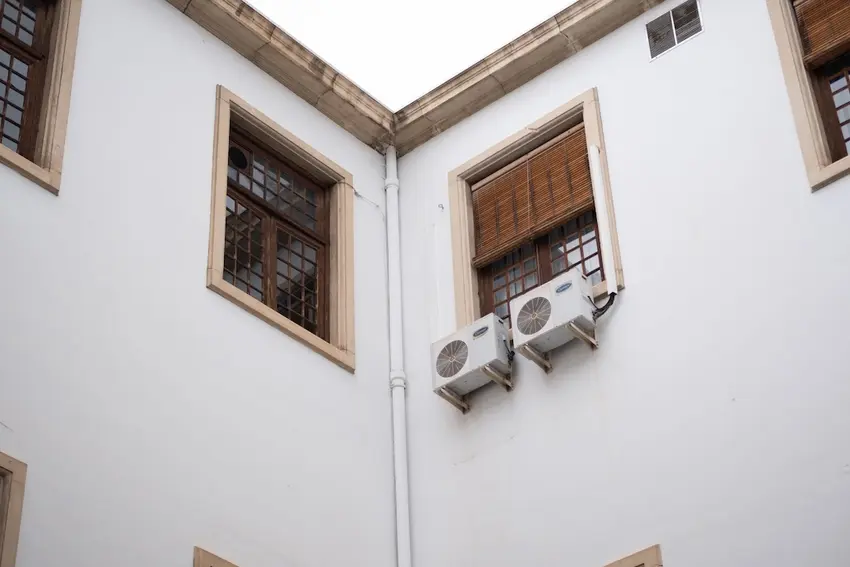
A split system normally has an indoor unit and an outdoor compressor. Installing it may involve drilling through walls, attaching equipment to the façade, running pipes through the building or placing a unit on a balcony, roof or shared area.
Those changes can affect the appearance of the building, other residents, noise levels and jointly owned parts of the property.
READ ALSO: OPINION: Austria’s hatred for air conditioning is just cultural stubbornness
As a result, buying the equipment is often the easiest part. The owner, landlord or other apartment owners may have to agree before installation begins.
Babler told the Bundesrat that the courts currently apply a strict test when deciding whether such work is customary or serves an important interest. He argued that air conditioning should no longer be treated automatically as a luxury in 2026.
What are the rules for tenants?
A tenant shouldn't install a fixed air-conditioning system without first clarifying the legal position with the landlord.
The Lower Austrian Chamber of Labour says a permanent system is normally treated as a structural alteration to the rented property.
Tenants should notify the landlord in writing before carrying out the work. The notification should be detailed and include technical plans, a description of the installation and a cost estimate.
In some rented flats covered fully by Austria’s Tenancy Act, the Mietrechtsgesetz or MRG, and in some co-operative housing, the landlord has two months to object. If no explicit refusal is received within that period, consent may be treated as granted.
But the rule doesn't apply identically to every tenancy.
The Upper Austrian Chamber of Labour warns that tenants in other types of rented housing may need the landlord’s express approval.
The landlord can object where the installation is not technically appropriate, damages the building, affects its outward appearance, creates a safety risk or interferes with legitimate interests.
Anyone who installs a fixed unit without the necessary permission could face legal action and may have to pay to remove it.
READ ALSO: How to keep your apartment cool in Austria this summer without spending too much
What about people who own their flat?
Owning an apartment doesn't necessarily mean being free to alter the façade.
In an Eigentumswohnung, the outside wall, roof and many other parts of the building are normally jointly owned by all apartment owners.
According to the Chamber of Labour, established case law from Austria’s Supreme Court means that fitting an air-conditioning unit to an exterior façade requires approval.
In many cases, the consent of all the other owners is needed because the alteration could affect their legitimate interests.
If approval is refused, the apartment owner may apply to the competent district court. A court decision can replace the missing consent if the legal conditions are met.
The owner would need to show, among other things, that the installation doesn't damage the building or endanger people or property, and that it is either customary or serves an important personal interest.
This process can take time and involve legal costs. It's one of the barriers the government may try to reduce.
What could the government change?
The exact reform is not yet clear.
The government could change the test used for approving air-conditioning systems, simplify the consent process or strengthen the position of residents who need heat protection for health reasons.
It could also extend beyond air conditioning.
READ ALSO: What tenants in Austria need to know about getting their rent reduced
Babler specifically mentioned external blinds, roller shutters and coatings that reduce the amount of heat entering through windows. These measures can also affect a building’s façade and may require permission under current rules.
Vienna has already eased the process for installing air-conditioning units in municipal housing, known as Gemeindewohnungen. Babler presented this as a possible example for a wider federal solution.
Any national reform would still need to balance the interests of residents, landlords, other apartment owners and, in some cases, heritage protection authorities.
Would easier permission solve the heat problem?
Only partly – and on an individual level, of course. Fixed split systems are more efficient than many portable air conditioners, but they still cost money to buy, install and run.
During the Bundesrat debate, FPÖ representatives argued that many households would remain unable to afford air conditioning even if the legal approval process became simpler.
Other parties stressed that residential heat protection should include more than mechanical cooling.
Possible measures include external shading, better insulation, planted façades, green roofs, removing sealed surfaces and creating more shade around buildings.
The Greens argued that landlords’ responsibilities for thermal renovation should also remain part of the discussion.
Babler similarly said air conditioning was not a cure-all. In the long term, buildings and neighbourhoods would need to be adapted to hotter summers.
READ ALSO: Austrian heatwave: Six tips to get a better night's sleep
Can you use a portable air conditioner without permission?
Usually, yes.
Portable units used entirely inside the flat do not normally require approval from the landlord or other apartment owners because they are not permanently attached to the building.
They can therefore be an immediate option for tenants who cannot install a split system.
But they are generally less efficient and can consume considerably more electricity.
They also need somewhere to release hot air, usually through a hose placed in an open or partially sealed window. That can allow warm air back into the room and reduce the cooling effect.
Fans, external shading and careful ventilation are cheaper alternatives. Closing blinds and windows during the hottest hours, then ventilating at night or early in the morning, can help prevent heat from building up.
READ ALSO: How to stay cool in Austria during a heatwave
Key vocabulary
die Klimaanlage – air-conditioning system
das Splitgerät – split air-conditioning unit
die Außenjalousie – external blind
der Rollladen – roller shutter
die Zustimmung – consent or approval
die bauliche Veränderung – structural alteration
das Wohnungseigentum – apartment ownership
Comments