
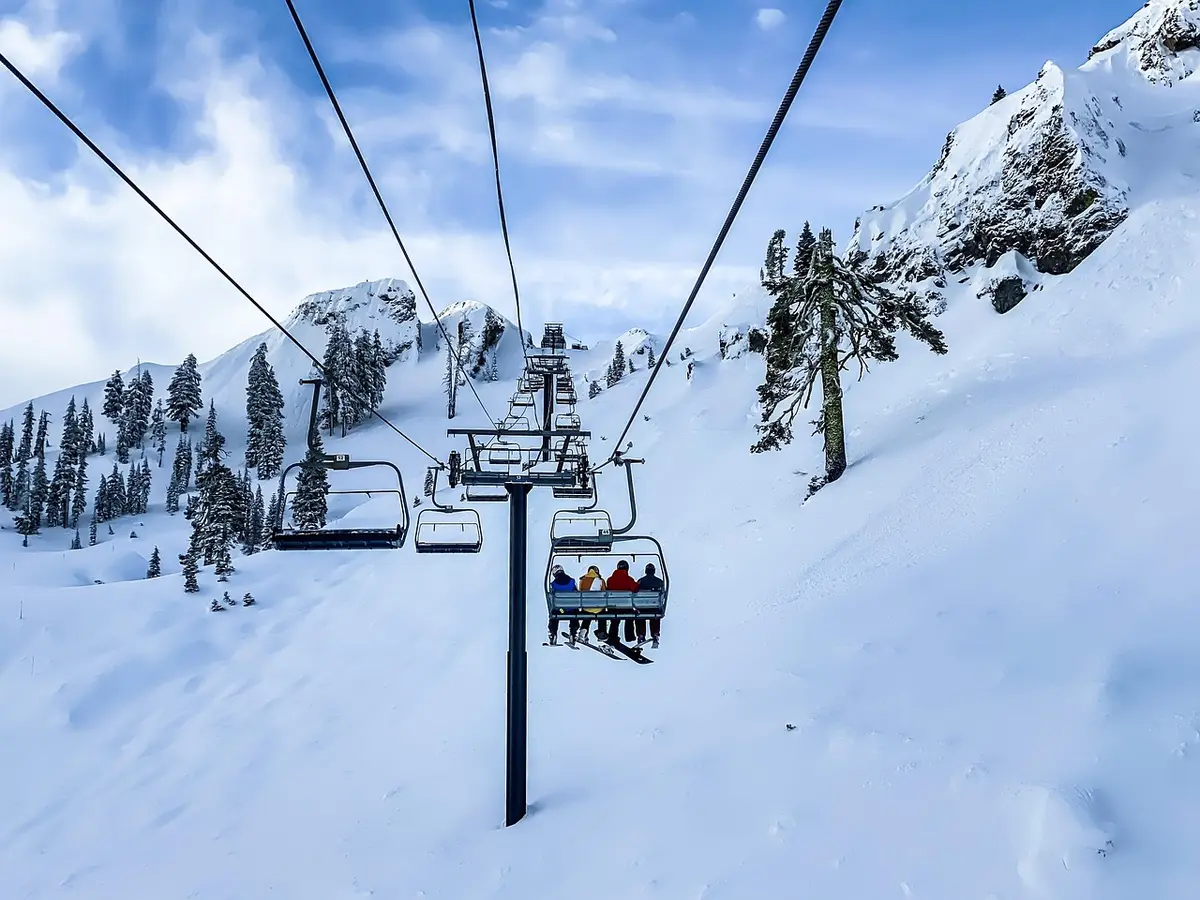
If you are injured in a ski accident in your free time and can’t work, you generally still have a right to continued pay from your employer in Austria.
The key exception is if the employer can prove you caused the accident intentionally or through “gross negligence” – in other words, by taking a serious risk you were clearly aware of. That is the point at which an employer may be able to refuse continued pay, labour law lawyer Sophie Loidolt explained in a Der Standard column.
What is the normal rule after a ski accident?
A ski accident is treated like other leisure-time accidents. If it makes you unfit for work, employees “generally have a right” to continued pay (Entgeltfortzahlung) from their employer, even though the accident happened outside work, she said.
How long the continued pay lasts depends on how long you have worked for the employer. The entitlement ranges from six to 12 weeks of full pay, plus a further four weeks on half pay “per working year”, depending on length of service. Once those entitlements are used up or reduced, employees receive sick pay (Krankengeld) from the relevant social insurance provider.
READ ALSO: What workers in Austria need to know about sick leave rules
When can an employer refuse to keep paying?
According to the article, there is no right to continued pay if the accident was caused intentionally, or through grossly negligent behaviour by the employe.e
Gross negligence can apply when someone knowingly accepts a significant risk. It can also apply if someone participates in a high-demand sport that requires experience but lacks the necessary skills, lawyer Loidolt explained.
However, the article stressed that court practice in Austria is “rather employee-friendly” on this point. Even if sports such as skiing, football or martial arts involve a higher risk of injury, doing them in your free time is not automatically considered gross negligence. So being injured while skiing does not, by itself, mean you lose your right to continued pay.
READ ALSO: Do you need a doctor's note on your first day off sick in Austria?
What kind of behaviour might count as gross negligence on the slopes?
Skiing comes with specific rules of conduct. Austria’s Supreme Court (Oberster Gerichtshof, OGH) has repeatedly referred to the rules of the International Ski Federation (FIS) and draft piste rules (POE rules) when dealing with liability questions. These include duties such as keeping a safe distance when overtaking and using the piste with appropriate caution.
If a work incapacity results from breaking FIS or POE rules, employers may be able to refuse continued pay in some circumstances. This could also apply if the accident was caused by grossly negligent behaviour, particularly skiing while heavily intoxicated or ignoring piste closures.
READ ALSO: Should I take out insurance before skiing in Austria?
A key practical point is the burden of proof. The company must prove the incapacity was caused intentionally or through gross negligence and that, as a result, there is no obligation to continue paying wages.
In practice, that proof is often difficult to provide. That is one reason why refusals to pay are often hard for employers to enforce, the expert added.
Key vocabulary
Krankenstand – sick leave (being signed off work due to illness or injury)
Skiunfall – ski accident
arbeitsunfähig – unfit for work / unable to work
Entgeltfortzahlung – continued pay while off sick
grobe Fahrlässigkeit – gross negligence
Beweislast – burden of proof
Comments