
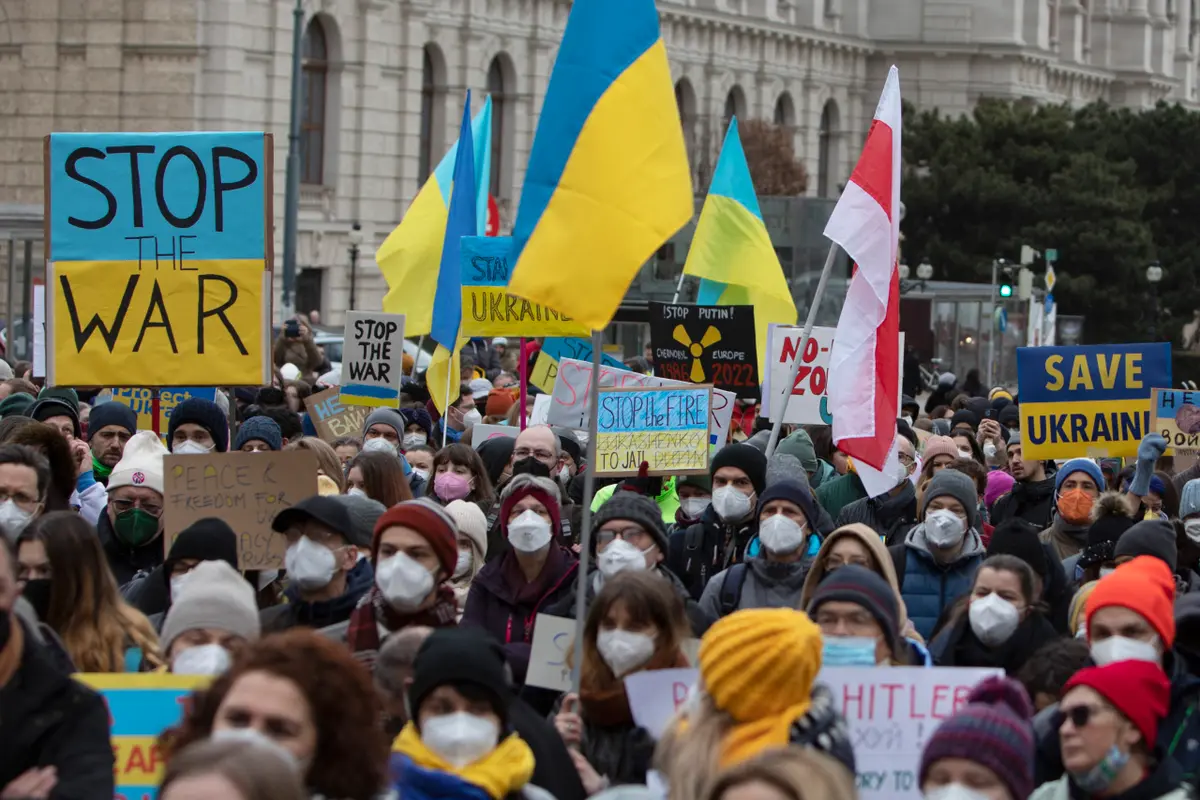
For 70 years, neutrality has been the cornerstone of Austria’s foreign policy, but debate about the policy has resurfaced since Russia invaded Ukraine. The Alpine nation has sided with other EU members in condemning the war, raising concerns that it is drifting from its neutral stance.
“For us, neutrality is a fundamental element of our national identity,” Andreas Wimmer, representative of the citizens’ initiative Voices for Neutrality, told AFP.
The far-right Freedom Party (FPOe), which won elections last year but failed to form a government, has also campaigned for maintaining neutrality and opposes aid to Ukraine, calling it a “betrayal”.
READ ALSO: What makes Austria one of the safest countries in the world?
A post-war foundation
In Austria, the policy of neutrality was imposed by the then Soviet Union as part of the settlement that ended the post-war occupation. Adopted on October 26th 1955, the federal constitutional law bars Austria from joining military alliances or hosting foreign troops.
For many Austrians, neutrality became intertwined with the idea of freedom, with 80 percent saying it forms part of national identity, according to an October poll.
READ ALSO: EXPLAINED: The history behind Austria's neutrality
Neutrality under pressure
Austria hosts one of the UN’s four headquarters and several major international organisations, including the International Atomic Energy Agency and OPEC. But unlike Switzerland, Austria’s neutrality “is evolving”, a European diplomat told AFP, noting that Vienna has supported EU financial aid for Ukraine and sanctions against Russia.
Foreign Minister Beate Meinl-Reisinger of the liberal NEOS told German newspaper Die Welt in July that, faced with “an increasingly aggressive Russia”, “neutrality alone no longer protects us”. She said Austria must consider strengthening its own defence capabilities.
Austria’s military budget was raised to 0.95 percent of GDP by 2024, with a goal of reaching two percent by 2032.
READ ALSO: EXPLAINED: Why isn't Austria in NATO?
Future of neutrality debated
Former Austrian diplomat Franz Cede said neutrality should not be “romanticised”, arguing it has been eroded since Austria joined the European Union in 1995. While Finland and Sweden joined NATO after Russia’s invasion, Austria “missed the moment”, he said.
Meinl-Reisinger said a debate on NATO membership could “be very fruitful”, though she added there is currently no political or public majority for joining the alliance.
The Voices for Neutrality group wants Austria to revive its Cold War-era role as an active mediator. In recent years, however, no high-profile international negotiations have been held in the country.
READ ALSO: Ukraine conflict: Would NATO protect non-member Austria?
Comments (1)