
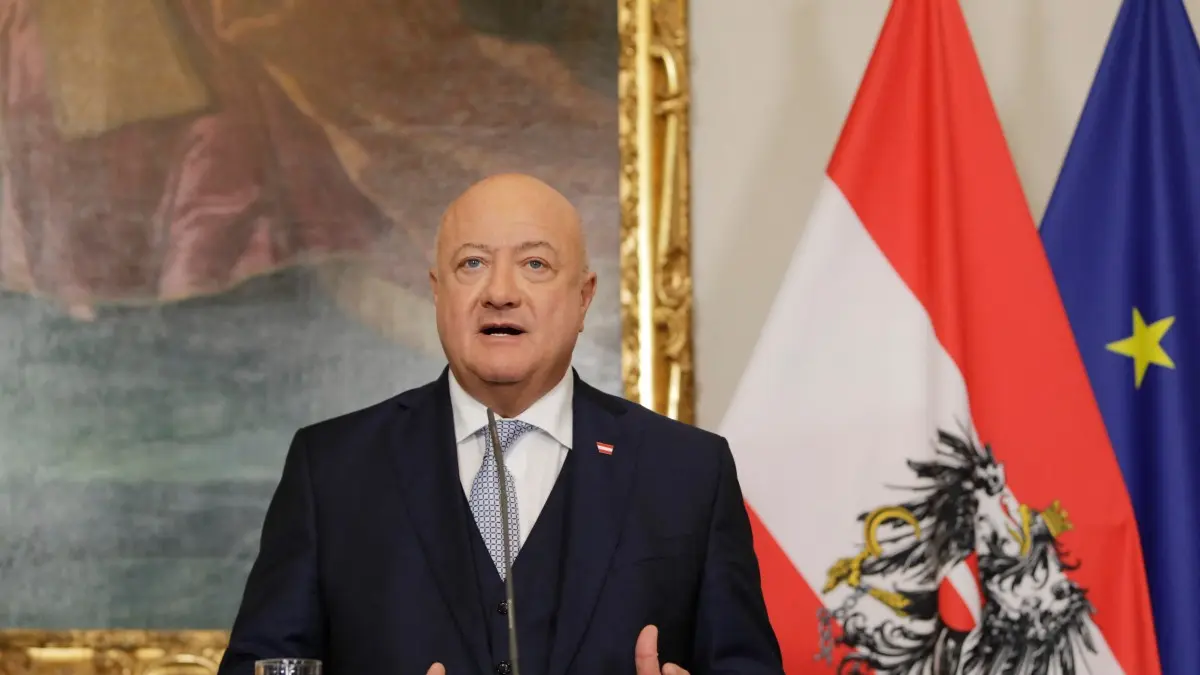
Austria announced on Wednesday that it would pause family reunifications for people with asylum status starting in May, becoming the first EU country to do so.
While several European Union countries are considering restricting the right to bring family members, Austria is the first to implement a complete halt.
Austria had already stopped reunifications for Syrians following the ouster of Syrian leader Bashar al-Assad in December, arguing that it needed to reassess the situation and threatening deportations.
READ ALSO: How Austria's new government plans to tighten integration and citizenship rules
Government cites strain on systems and integration
Syrians account for the majority of family reunifications, but the newly formed conservative-led government said it would halt all new entries amid rising anti-immigration sentiment.
Integration Minister Claudia Plakolm of the conservative Austrian People’s Party (ÖVP) said the government would introduce legal changes allowing the interior ministry to issue a decree to pause reunifications.
"By May, so in just a few weeks, the stop is expected to become reality," Plakolm said.
She added that Austria's systems had "reached their limits" and that successful integration becomes less likely with each new arrival.
The measure will initially last for six months but could be extended until May 2027. Plakolm described the integration of recent arrivals — many of whom face challenges learning German and finding jobs — as a "mammoth task".
Rights groups plan legal challenge
According to government data, nearly 9,300 people arrived via family reunification in 2023, and around 7,800 in 2024 — most of them minors, which the government said puts pressure on schools.
Human rights organisations criticised the move, with Asylkoordination Österreich saying it would challenge the decree in court.
"There must be an emergency (to allow the government to pause family reunification), which in Austria is not the case," said spokesperson Lukas Gahleitner.
The far-right Freedom Party (FPÖ), which ran on an anti-immigration platform, won the largest share of the vote in last September’s parliamentary elections but failed to form a government. The ÖVP instead formed a coalition with the Social Democrats (SPÖ) and the liberal NEOS.
READ NEXT: What changes people in Austria can expect under the new government
Comments