
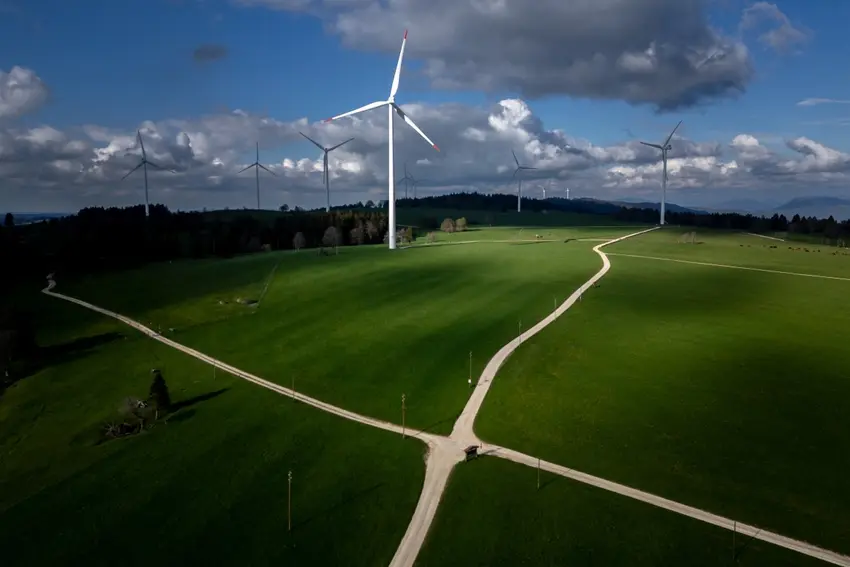
Austria unveils ambitious climate plan, but details on subsidy cuts remain vague
The Austrian government has presented its National Energy and Climate Plan (NEKP), outlining its strategy to achieve the EU's legally binding climate targets by 2030. The plan includes ambitious goals, such as abolishing climate-damaging subsidies, though the specifics of these measures remain unclear. While Climate Minister Leonore Gewessler suggested ending the diesel privilege, the Ministry of Finance stated that details are yet to be determined by a working group. The plan also highlights maintaining subsidies for heating system replacements and building renovations, increasing industry hydrogen production, and using permanent CO2 storage for unavoidable emissions.
Nine must-try food specialities from every Austrian province
From Kasnudeln and Salzburger Nockerl to Mohnnudeln and Käskmöpfle. Here is what you need to try when visiting Austria's different provinces.
Austria to roll out benefits-in-kind card for asylum seekers nationwide
The Ministry of the Interior plans to introduce a nationwide benefits-in-kind card for asylum seekers following a successful pilot project. The card, intended to replace cash payments, will allow beneficiaries to purchase essential goods and services directly. The Ministry said this move aims to curb the misuse of funds and ensure fairer distribution within families. Although the federal government cannot enforce its adoption, individual states will have the autonomy to implement the system.
Austria debates messenger surveillance after terror threat
The Austrian government is considering extending the powers of the Directorate for State Security and Intelligence (DSN) to monitor messenger services in the wake of a recently foiled terror plot. Interior Minister Gerhard Karner has submitted a draft law for review, but a decision is unlikely before the upcoming elections. The Greens, initially opposed, have become more open to the idea, while the ÖVP has made it a condition for future coalition negotiations. The proposed law addresses concerns raised by the Constitutional Court in a previous ruling, ensuring that messenger surveillance is used only in limited circumstances to prevent serious attacks.
Vienna hikes water, waste, and parking fees in 2025
Starting January 1st, 2025, residents of Vienna will face a slight increase in charges for water supply, wastewater, waste disposal, and parking tickets. These increases, driven by the consumer price index, will result in a roughly 6 percent fee rise. While this translates to a modest increase of €1.35 per month for an average single household and €3.11 for a multi-person household, the city emphasises that fees remain comparatively low compared to other Austrian and European cities.
Hollabrunn is no longer a disaster area after severe storms
The district of Hollabrunn in Austria is no longer considered a disaster area as of Tuesday afternoon, following severe storms that caused widespread flooding and damage. The disaster status, declared on Saturday, was lifted after extensive pumping and clean-up operations were completed. The region experienced numerous fire brigade operations, road closures, and flooding up to one meter deep in some areas. Though the situation has improved, the focus now shifts to clearing debris and repairing the damage caused by the storms.
If you have any questions about life in Austria, ideas for articles, or news tips for The Local, you can contact us at news@thelocal.at or leave a comment below.
Comments