
Austrian far-right leader 'picked up' at German border
Austrian right-wing extremist Martin Sellner faced a police stop at the German border on Monday.
Sellner shared images of the incident on his Telegram channel, revealing a police car and officers searching him. The detainment comes as German authorities are exploring measures to prevent Sellner, an EU citizen, from entering the country for public order, security, or health reasons.
The scrutiny intensified after Sellner delivered a lecture in Potsdam last November, during which he allegedly suggested the expulsion of millions of people from Germany, as the research platform Correctiv reported. Spiegel magazine also noted that the German federal police issued an alert for an undercover search for Sellner. However, this doesn't confirm a ban on Sellner's entry into Germany.
The foreign authorities in Potsdam, Brandenburg's capital, are conducting the ongoing examination.
READ ALSO: Tens of thousands protest against Austria's far-right
IN NUMBERS: How much does it cost to live in Vienna in 2024?
From rents to schools, meals and leisure expenses, how much money can you expect to spend living in the Austrian capital in 2024?
Childcare debate in Carinthia
A heated debate has erupted between coalition partners SPÖ (Social Democratic Party of Austria) and ÖVP (Austrian People's Party) in Carinthia over the issue of childcare.
The SPÖ has advocated for increased company kindergartens, while the business community, represented by the ÖVP, insists on enhanced public provision. The discussion, fueled by press releases and email exchanges, reflects the ongoing tension between the two parties on this critical matter.
The SPÖ provincial party committee, led by chairman Peter Kaiser, recently engaged in discussions about the importance of company kindergartens. Kaiser emphasised the potential of these examples to address the labour shortage: "They may draw on these examples of company childcare as a lever to combat the labour shortage."
This statement prompted a swift response from Vice President Astrid Legner of the Chamber of Commerce, highlighting that childcare subsidies predominantly come from the state and municipalities. Legner insisted that entrepreneurs receive minimal support and urged municipalities and the public to contribute more to childcare provision.
READ ALSO: How does childcare work in Austria?
Allergy season kicks off
As the new year begins, the pollen season is starting early in the south of Styria, triggering alerts from the pollen information service. Since Friday, increased exposure to hazel and alder pollen has been reported, with experts attributing the early onset to high temperatures and associated ozone pollution, placing additional strain on allergy sufferers.
Markus Berger, from the Pollen Information Service, highlighted the impact of ozone on allergy sufferers, stating, "Due to the production of UV light and exhaust gases, ozone is already causing problems during the early flowering period, in some cases during the birch season." He emphasised that hazel pollution in southern Styria is evident in urban and rural areas, exacerbated by long-distance transport from other federal states.
Berger noted the impact of climate change on the duration of the pollen-free period, stating, "But with the trend that it's getting warmer every year, the pollen-free period is also getting shorter." Last year's warmer temperatures contributed to an extended pollen season, with over 300 pollen days and only a brief allergy-free period from mid-October to mid-December.
For allergy sufferers, relief can be found through antihistamines and nasal sprays containing cortisone. However, Berger emphasised the importance of patience and long-term solutions, stating, "Hyposensitization takes at least three years. It is very important that patients really stick with it and see it through, as an untreated allergy can get worse over the years."
READ ALSO: 'Stress blooming': Why is Austria covered in pollen?
Medical emergency forces unscheduled landing at Vienna Airport
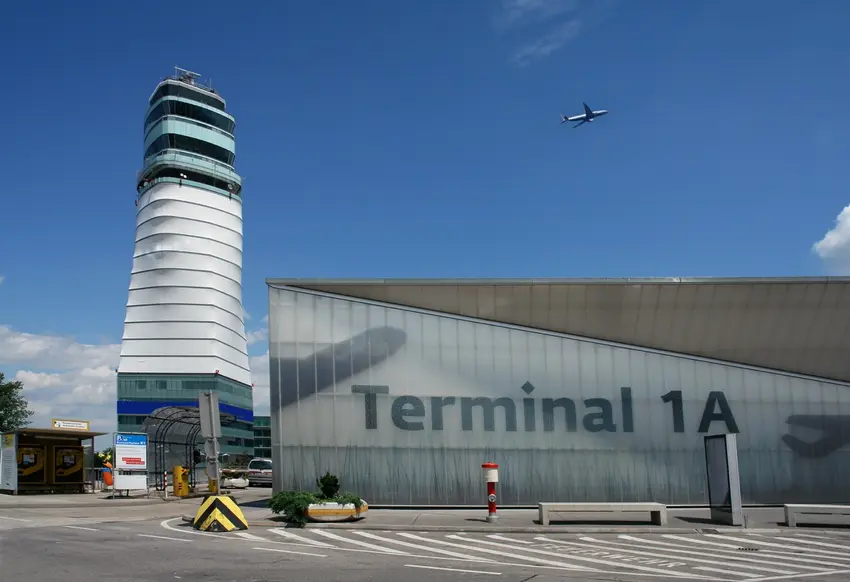
Vienna Airport in Schwechat witnessed an unscheduled landing on Sunday as an easyJet passenger plane travelling from Antalya, Turkey, to London had to divert due to a medical emergency involving a female passenger.
While the Lower Austria regional police department did not disclose the specific details of the medical emergency, they assured that the woman's condition was not life-threatening.
According to police spokesman Raimund Schwaigerlehner, the crew decided to make the unplanned stop in Vienna in response to the woman's medical condition. The airline, easyJet, confirmed the incident.
Upon landing in Schwechat, a waiting rescue team promptly received and cared for the woman. EasyJet reported that the flight resumed with minimal delay after addressing the medical situation. Schwaigerlehner clarified that in such cases, it is not considered an "emergency landing."
The woman has been discharged from the hospital and continued her journey to England.
READ ALSO: Reader question: How do I get from Vienna Airport to the city centre?
If you have any questions about life in Austria, ideas for articles or news tips for The Local, please get in touch with us at news@thelocal.at.
Comments